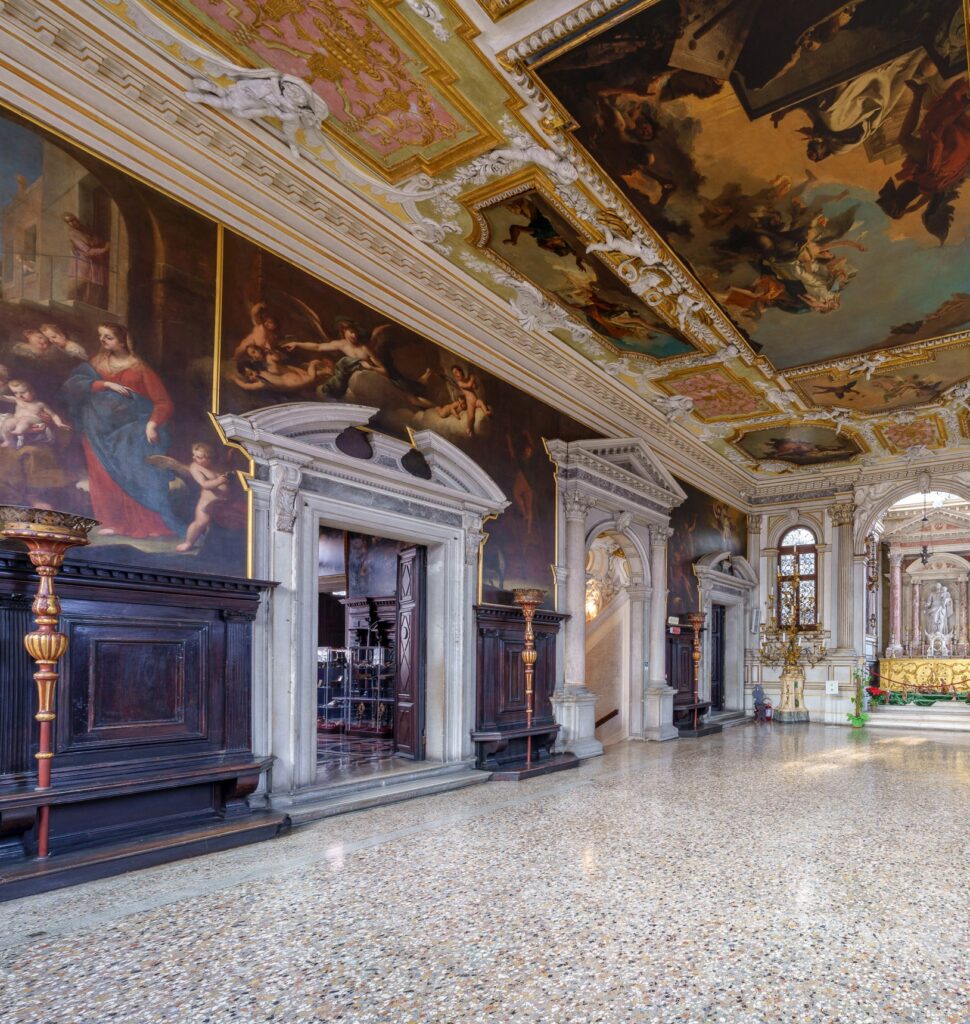
The Sala Capitolare – or Chapter House – is situated directly above the chapel and coincides with it in terms of floor plan. The room, which is flooded with light thanks to the windows on two sides, is the most important in the School and is used for the plenary meetings of its members.
The structure and most of the paintings on the walls date back to the mid-seventeenth century, but the highlight of its decorative features is the extraordinary ceiling, painted by Giambattista Tiepolo between 1739 and 1749.
The entrance wall is punctuated by three large doorways. The central one, situated by the staircase, is the most imposing; the other two, flanking it and leading respectively to the left and right to the Sala dell’Albergo and the Sala dell’Archivio, are lower in height.
The overall design is attributed to Baldassare Longhena, who also created the complex structure of the altar, possibly completed by Antonio Gaspari.
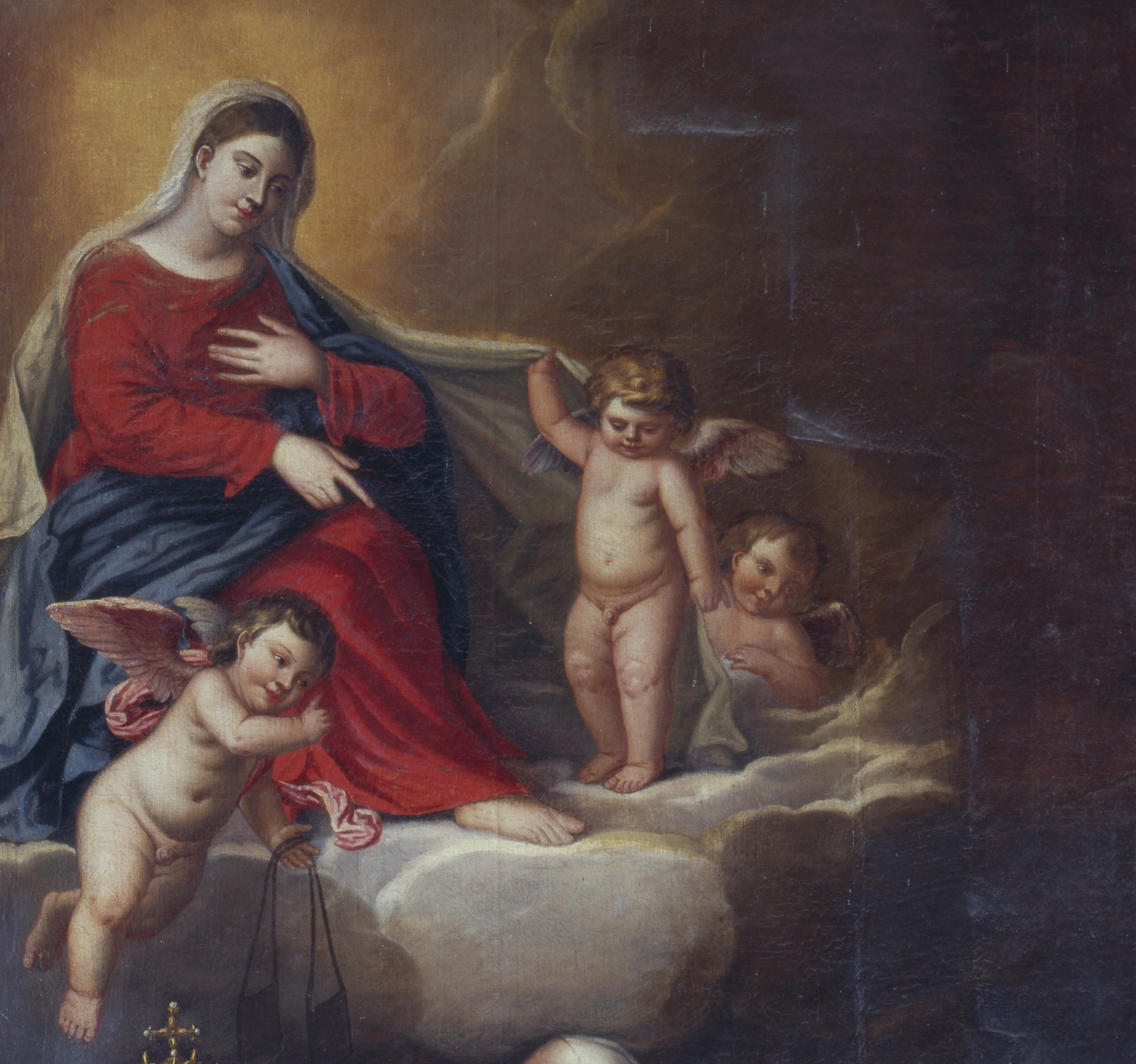
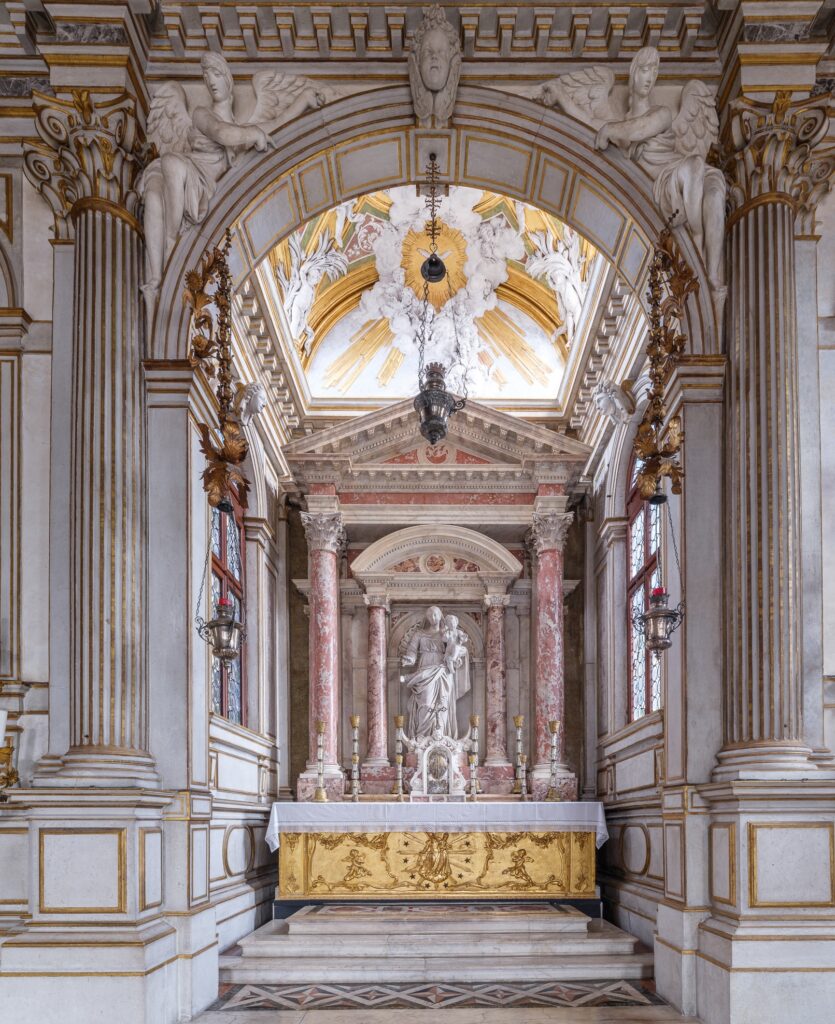
On the rear wall, a triumphal arch – embellished with gilding and stucco angels on the spandrels by Abbondio Stazio – frames a large, luminous niche, which in turn houses the altar, with, at its centre, the white marble statue of the Virgin and Child offering the scapular, sculpted by Bernardino Falcone in 1659. The decoration of the ceiling of the small space, in white and gold stucco, is also attributed to Stazio, probably in 1722.
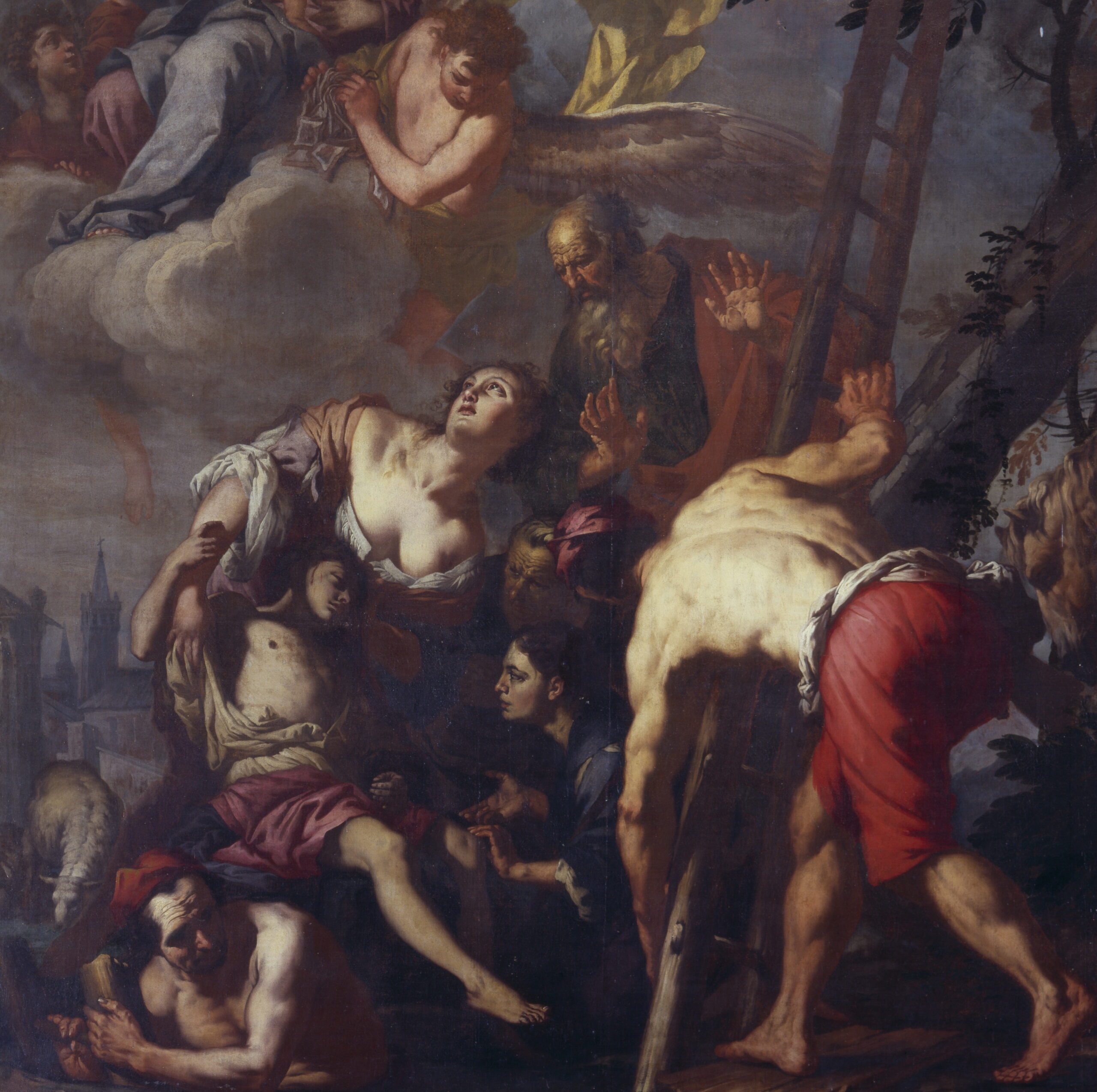
Along the walls of the room, covered in the lower part by wooden benches with seats for the brothers during meetings, there is a series of large canvases, dating from around 1665, mainly depicting miracles performed by the Virgin Mary. Opposite the entrance from the Grand Staircase, between the windows, are three works by Antonio Zanchi.
In The Rescue of the Child Fallen into the Well, the painter captures the moment when, thanks to Mary’s intercession, two men manage to rescue a child who has been trapped at the bottom of a well for eight days. The tension of the moment is emphasised by a violent light coming from the left, which shapes the faces and figures, creating an evocative play of light and shadow.
A similar use of light also dominates the next painting, The Healing of the Prince of Sulmona, which depicts the miraculous intervention of the Virgin to save a nobleman who was wounded during a tournament. The light strikes the figures carrying the wounded man, while the night-time setting amplifies the pathos and emotional intensity of the scene.
Zanchi’s compelling narrative of Mary’s timely intercessions in times of grave misfortune and illness is completed by a third large canvas: The Healing of a Sick Man through the Intercession of the Virgin. The lively palette and dramatic lighting of the painting heighten the intensity of the scene, giving it a strong emotional impact and emphasising the miraculous power of divine intervention.
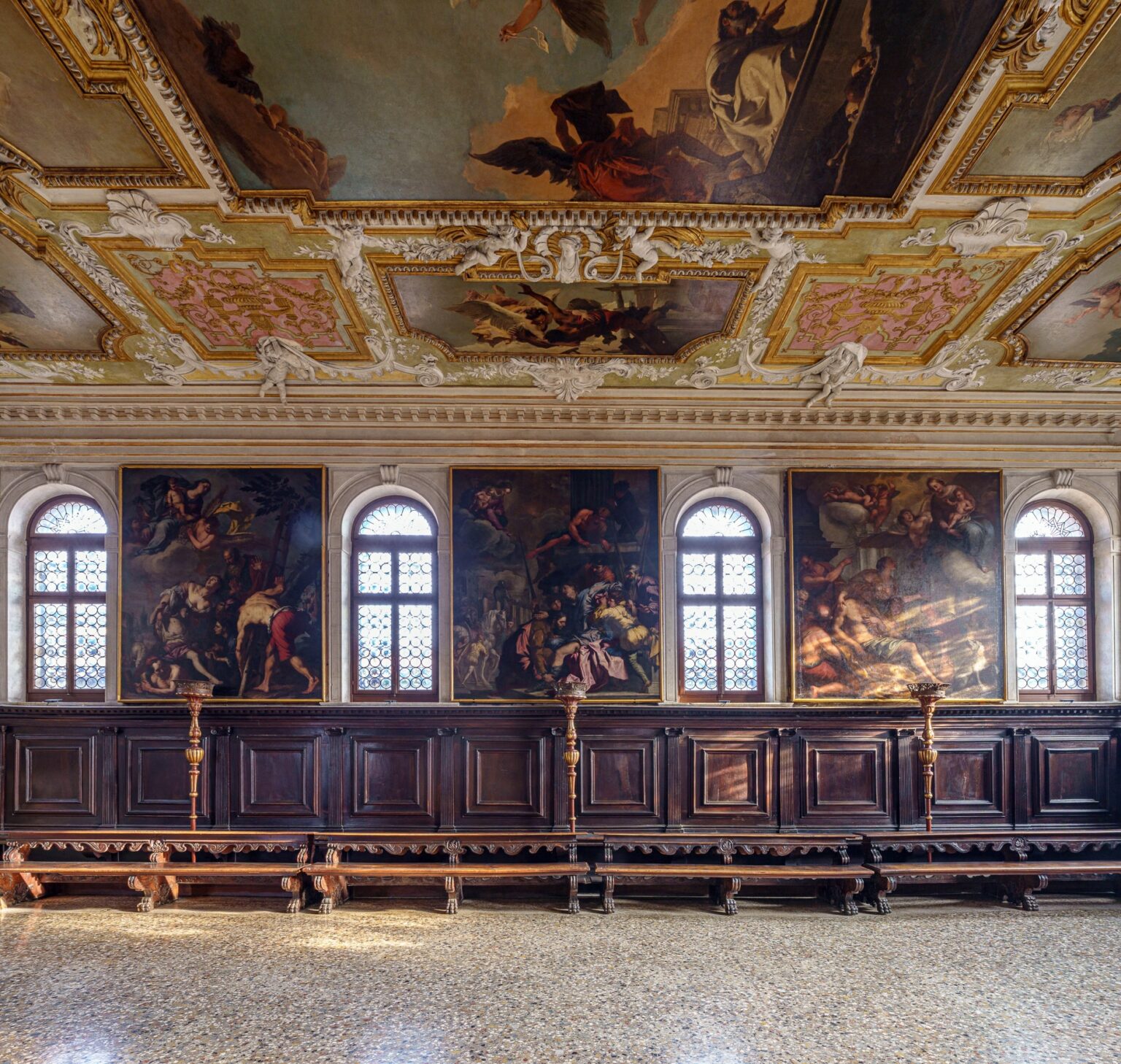
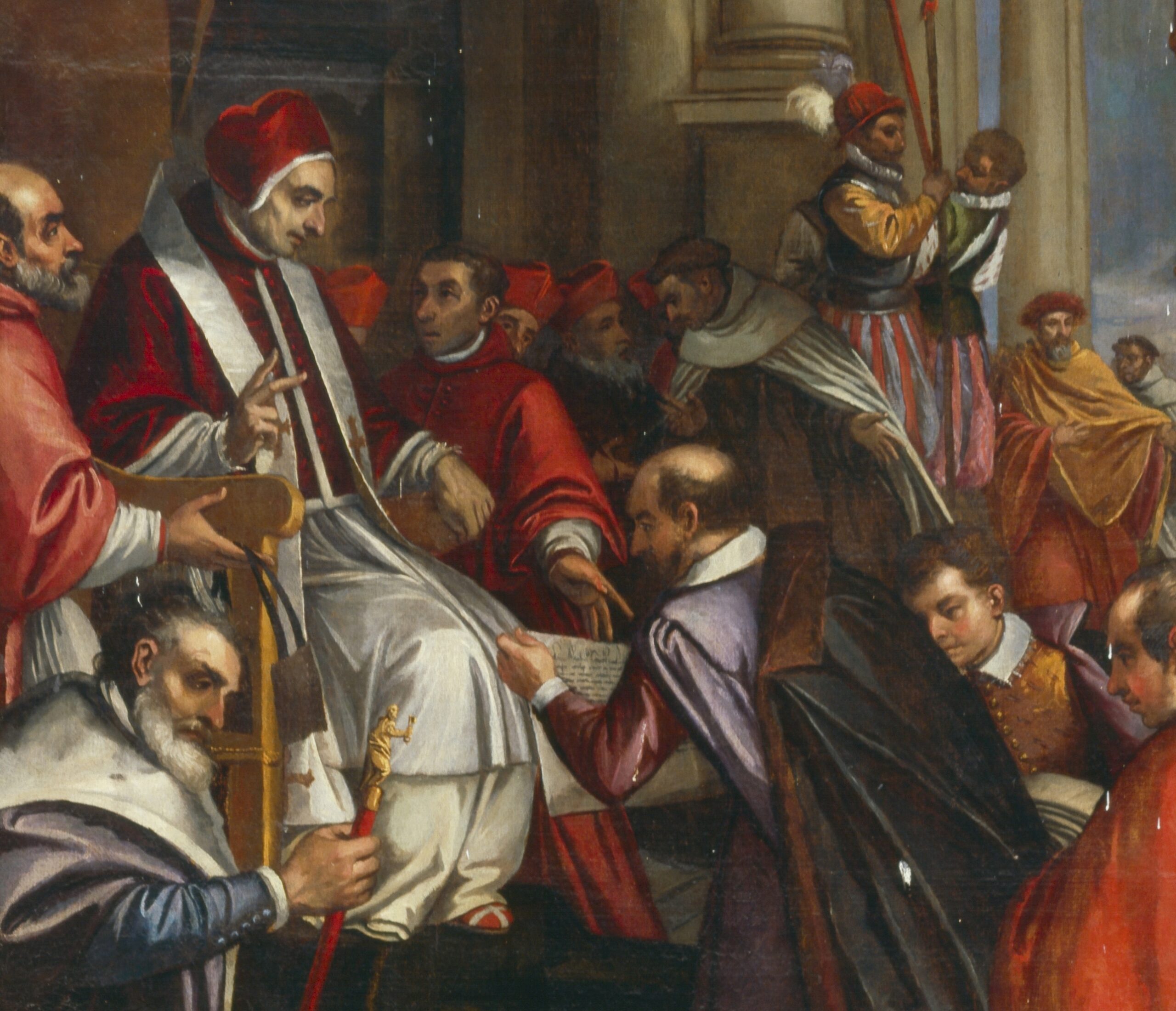
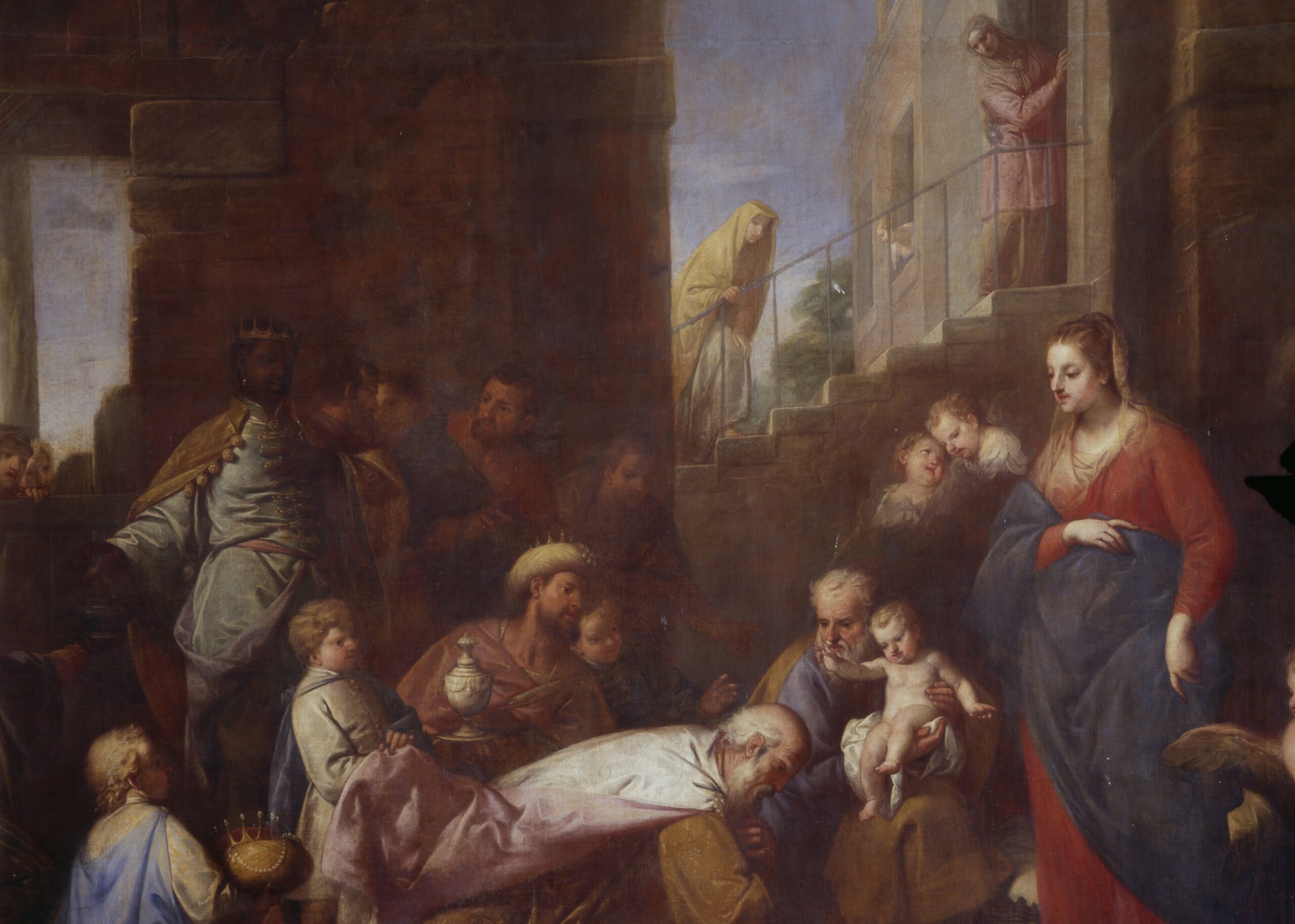
On the opposite wall, the one with access to the Grand Staircase, two large canvases by Gregorio Lazzarini stand out: the Adoration of the Magi and the Adoration of the Shepherds, both dating from 1704.
The second picture continues from the first, and is shaped around the intricate marble frames of the doorways, covering the section of wall flanking the central door, before extending above the entrances to the Sala dell’Albergo and Sala dell’Archivio.
Giambattista Tiepolo’s ceiling
On 19 January 1740, the painter submitted two designs for the renovation of the hall’s ceiling, of which the second was chosen. The painter undertook to deliver the nine planned canvases in two phases: the central one by Christmas and the eight side panels by the summer of 1741. However, he failed to meet the deadlines: the side panels were not completed until 1743, and the central one was delivered in 1749.
It is likely that Tiepolo himself played a significant role in defining the theme, centred on Marian virtues and devotion to the scapular.
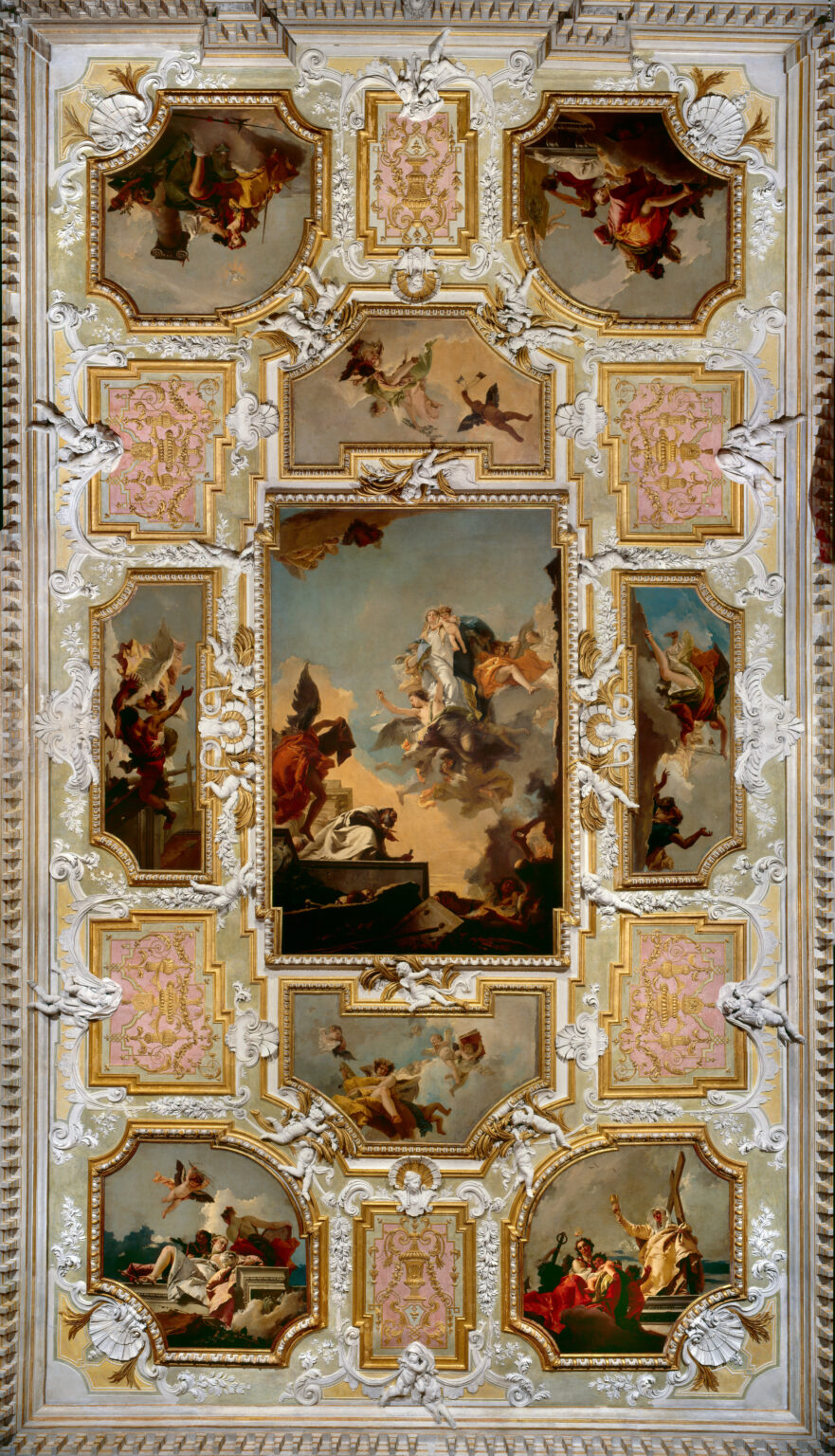
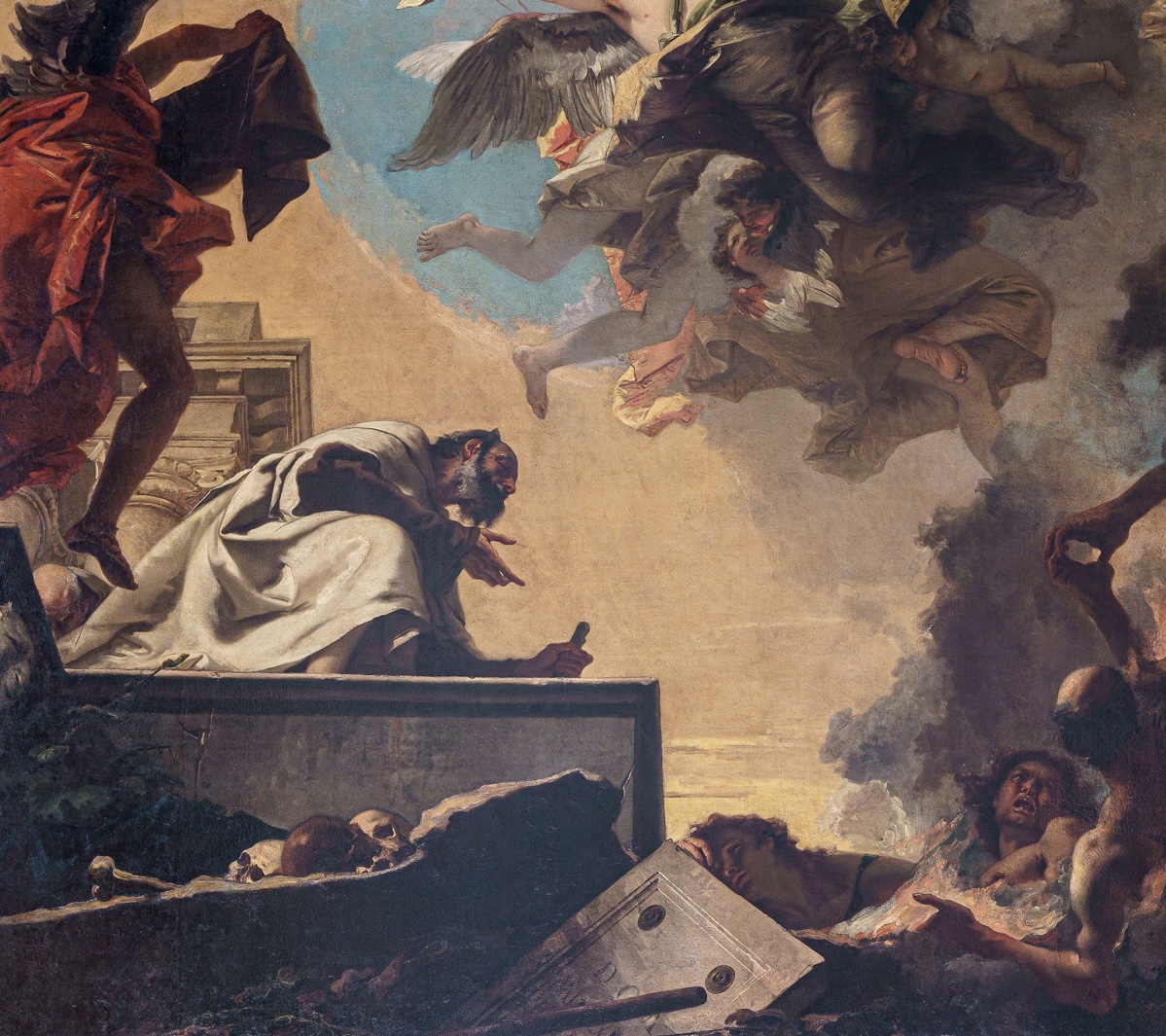
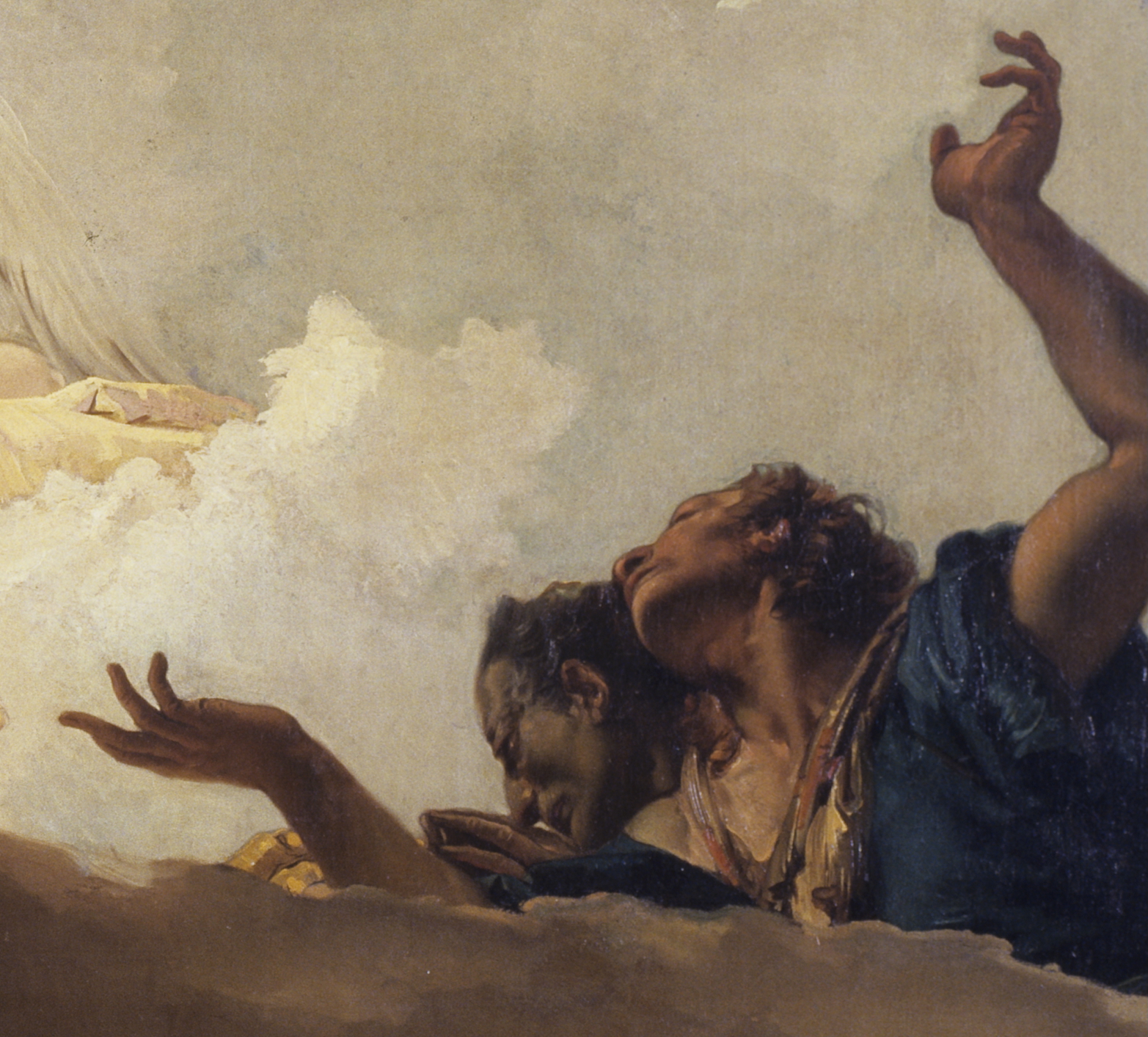
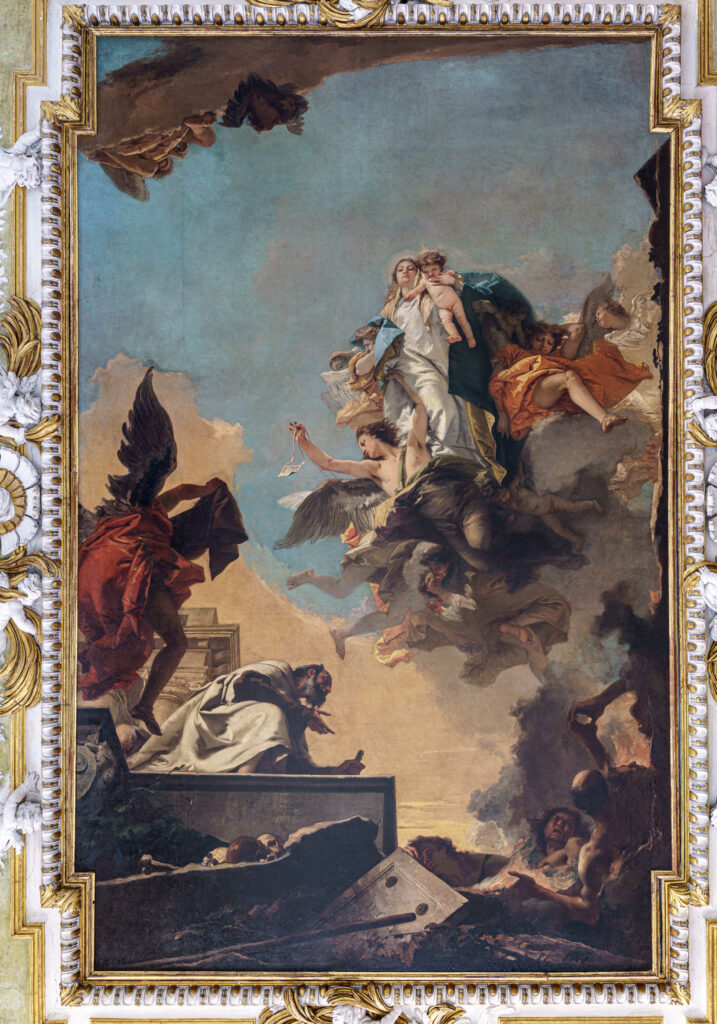
At the centre of the ceiling, a large canvas depicts the devotional focal point of the Scuola: The Apparition of the Virgin to Saint Simon Stock. Enlivened by skilful lighting effects, the composition depicts the saint in the lower section, in semi-darkness, clad in the brown and white habit of the Carmelite Order and kneeling upon an imposing architectural element, reminiscent of the edge of the cornice of a classical temple.
Below him are open tombs and souls in purgatory, while above is a bright sky in which the Madonna and Child appear, surrounded by a procession of angels supporting and lifting her up. One of the angels, closest to the Virgin, proffers a scapular to the saint.
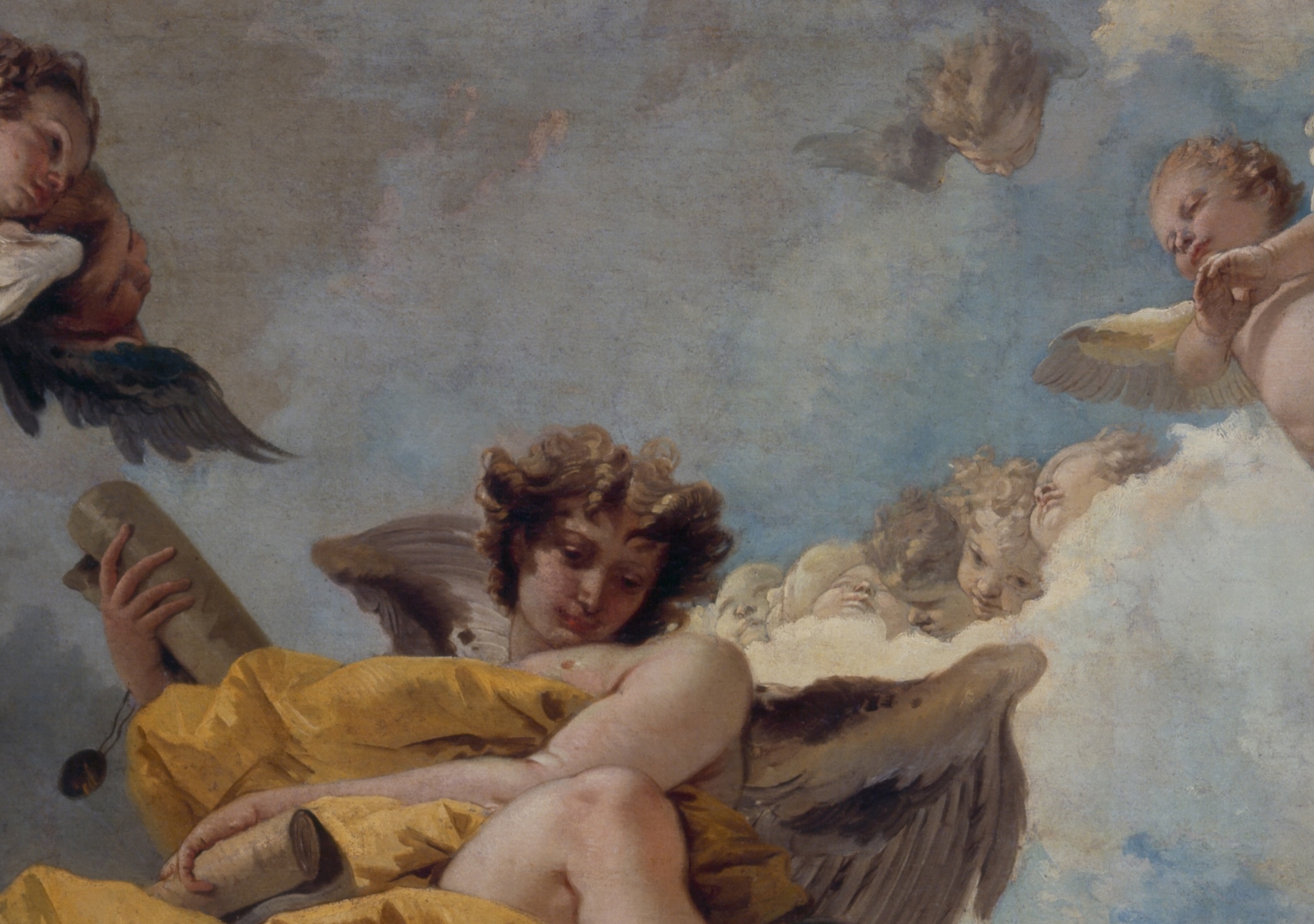
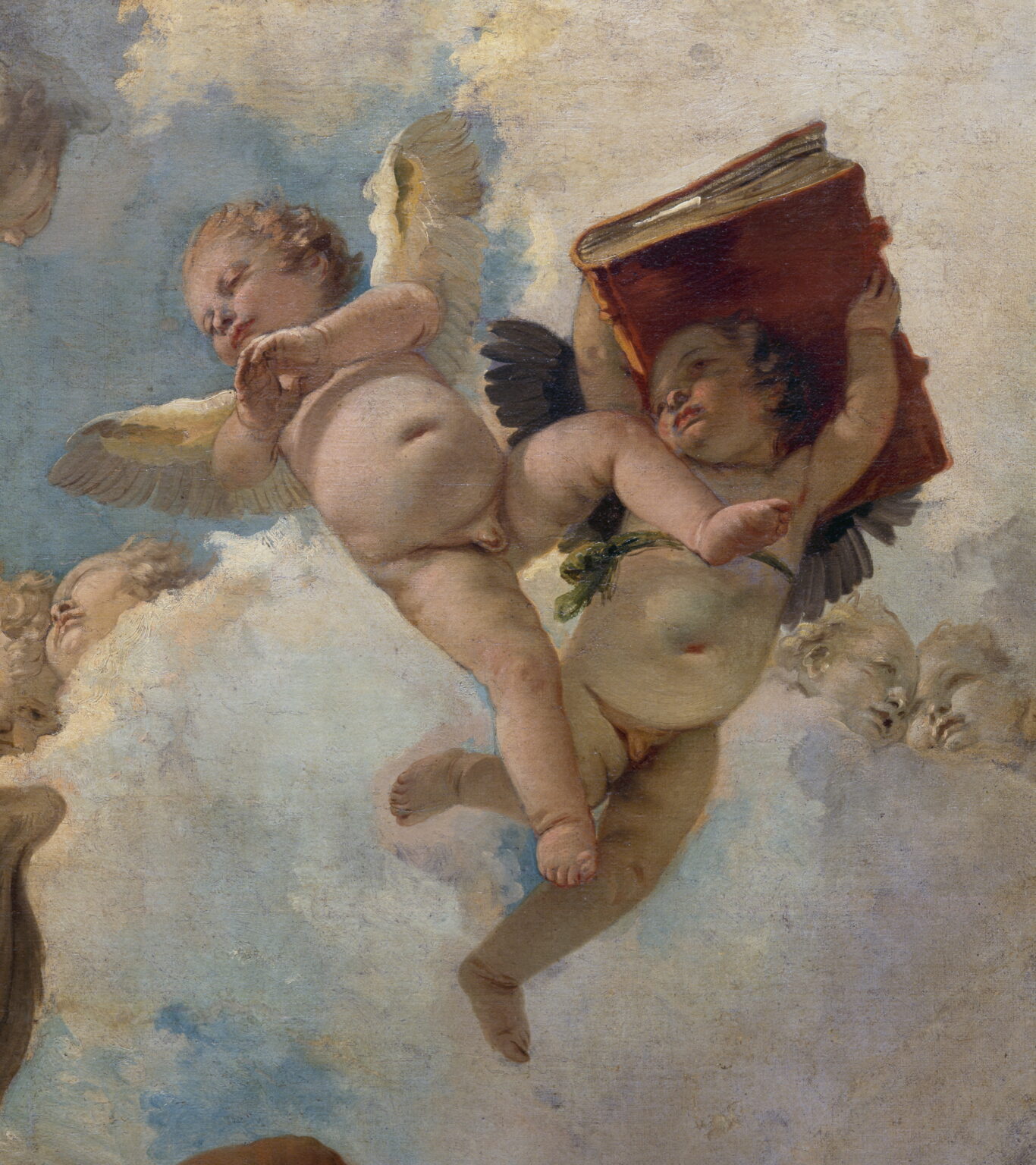
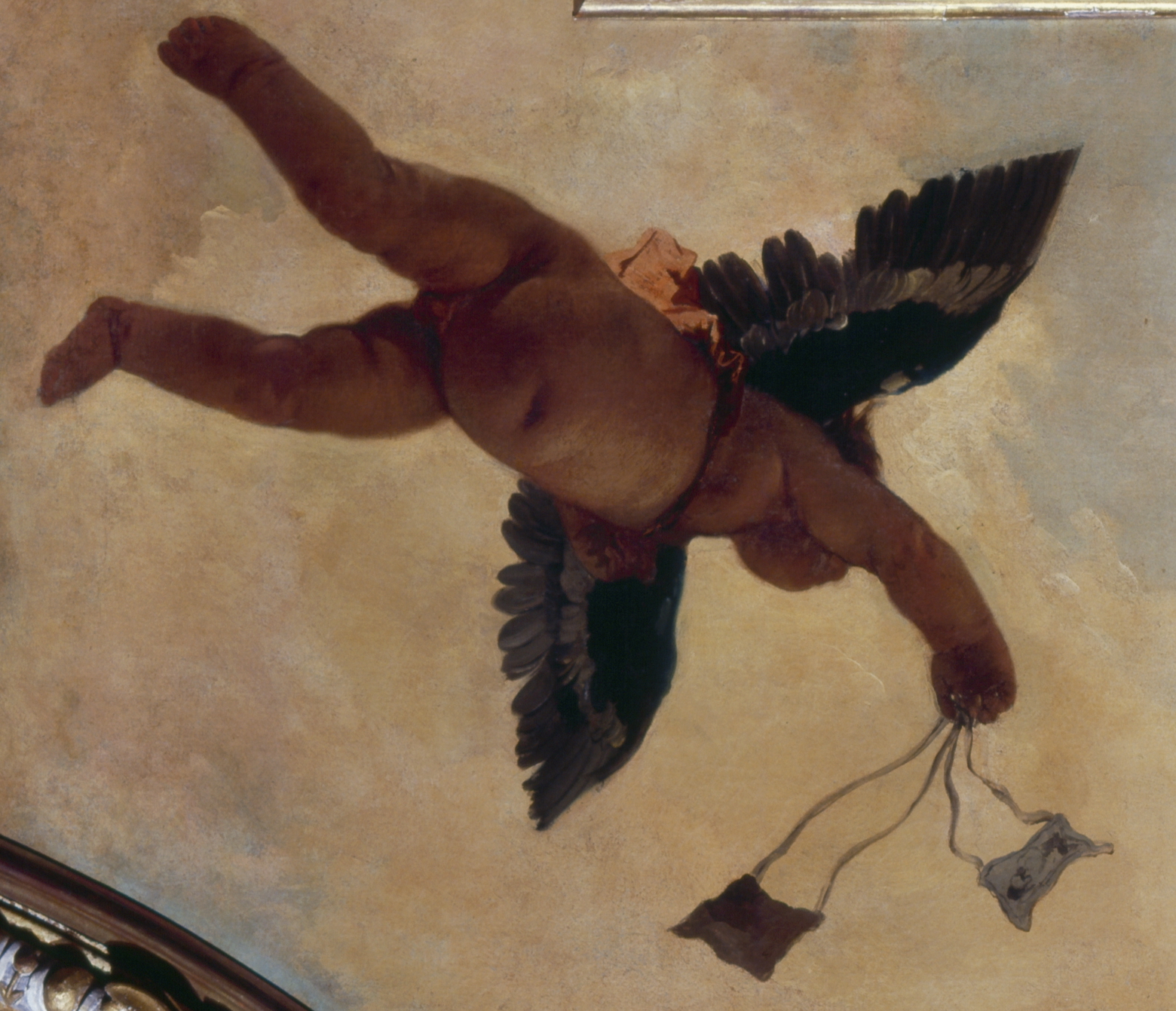
The four shaped compartments arranged along the sides of the central painting depict themes relating to the Scuola and the miraculous properties of the scapular. On the short sides, there are two canvases characterised by large areas of vivid blue sky. In the one towards the counter-façade, angels and winged cherubs hold volumes, scrolls of parchment and the book of the Mariegola, the Scuola’s statutes. In the one nearer the altar, an angel in green and pink robes is seated on a cloud, raising a bunch of lilies, while a cherub in flight bears the scapular.
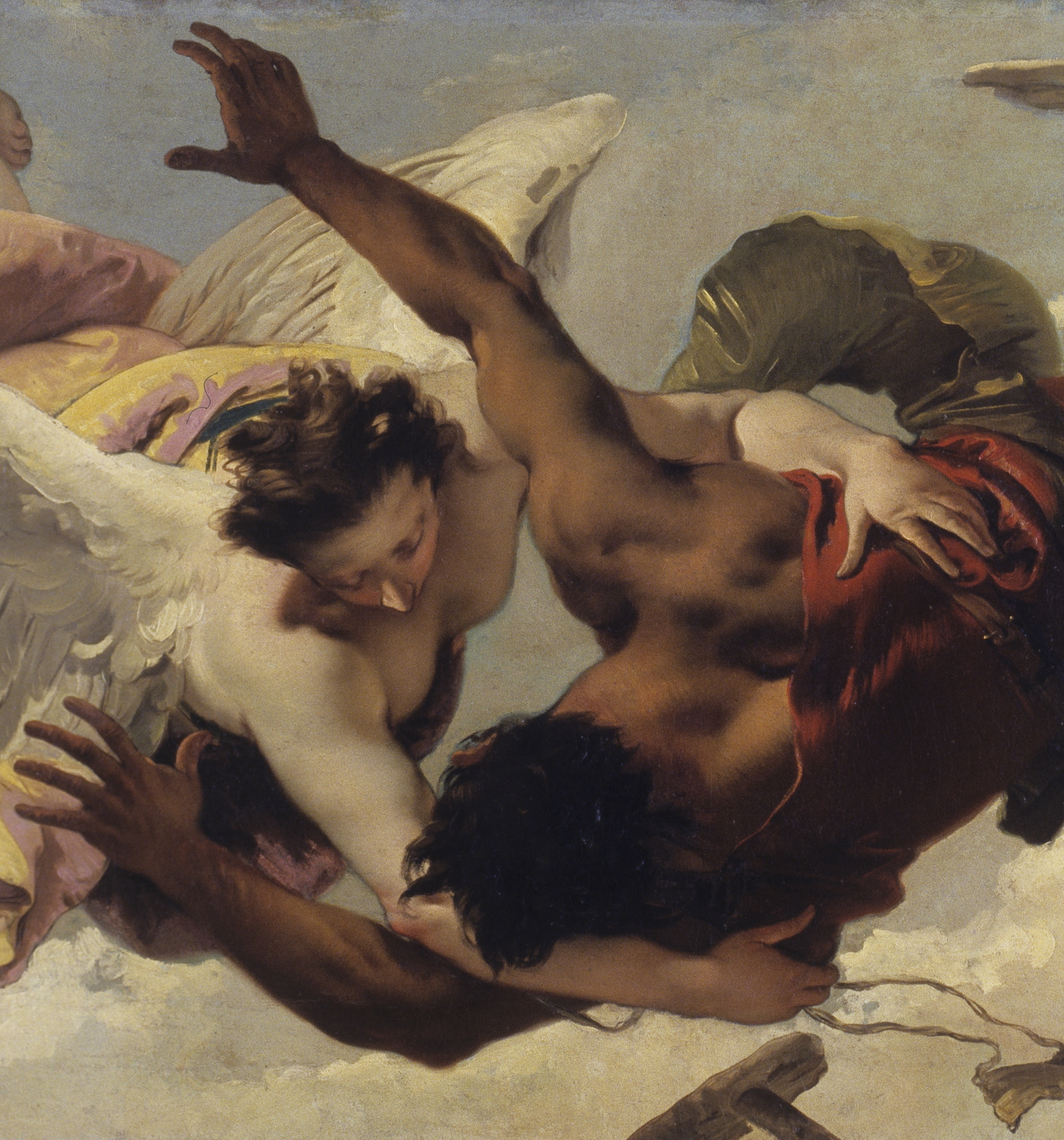
In the first of the two elongated compartments, the one furthest from the entrance wall, we see An Angel saving a Stone Mason devoted to the Virgin Mary as he falls from a Scaffold. In a dynamic and highly dramatic composition, Tiepolo achieves a perfect interaction between the human and divine planes. The scene captures the violence of the young man’s fall and, at the same time, the providential intervention of the angel, who saves him by embracing him.
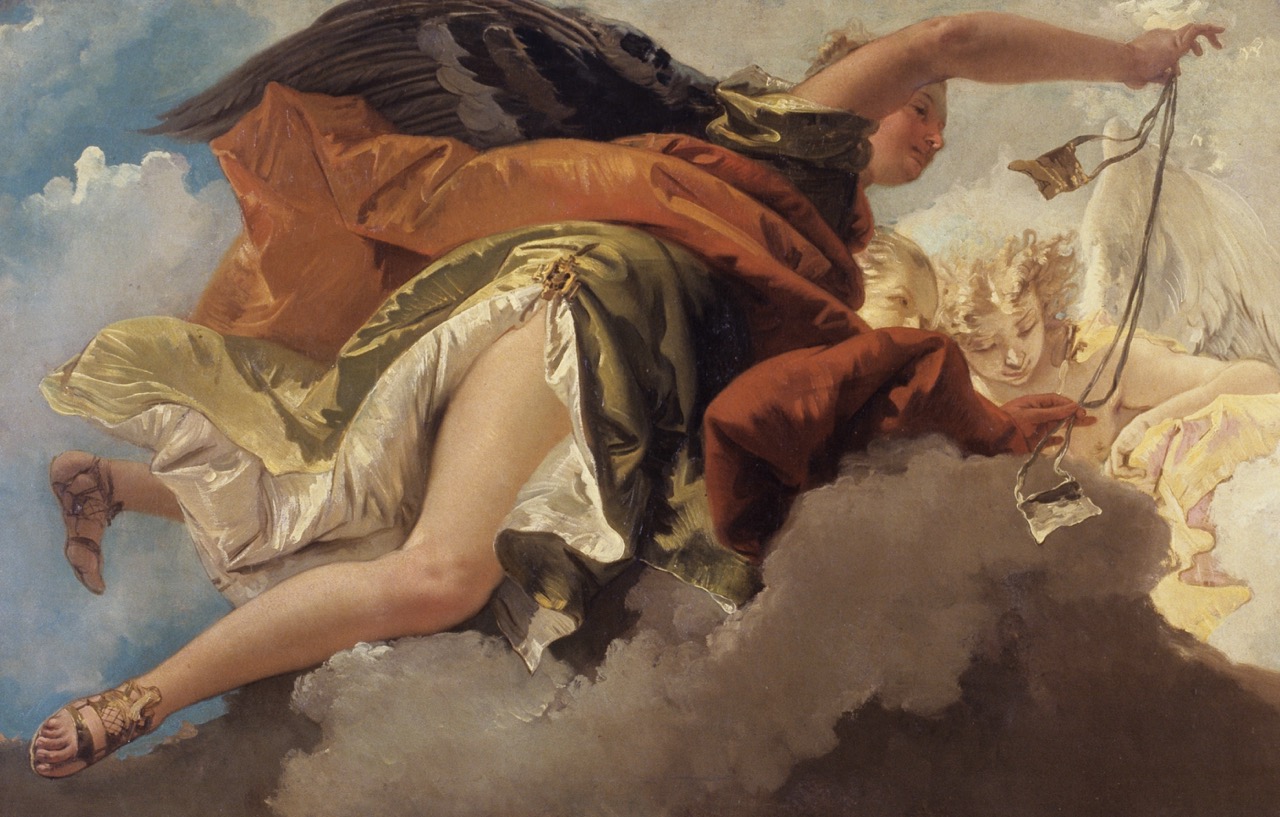
In the second compartment, closer to the entrance, we find The Angel shows the Scapular to the Souls in Purgatory: a group of angels descend in flight to comfort the suffering souls, captured with intense expressions and hands raised in a striking gesture of supplication, devotion and hope.
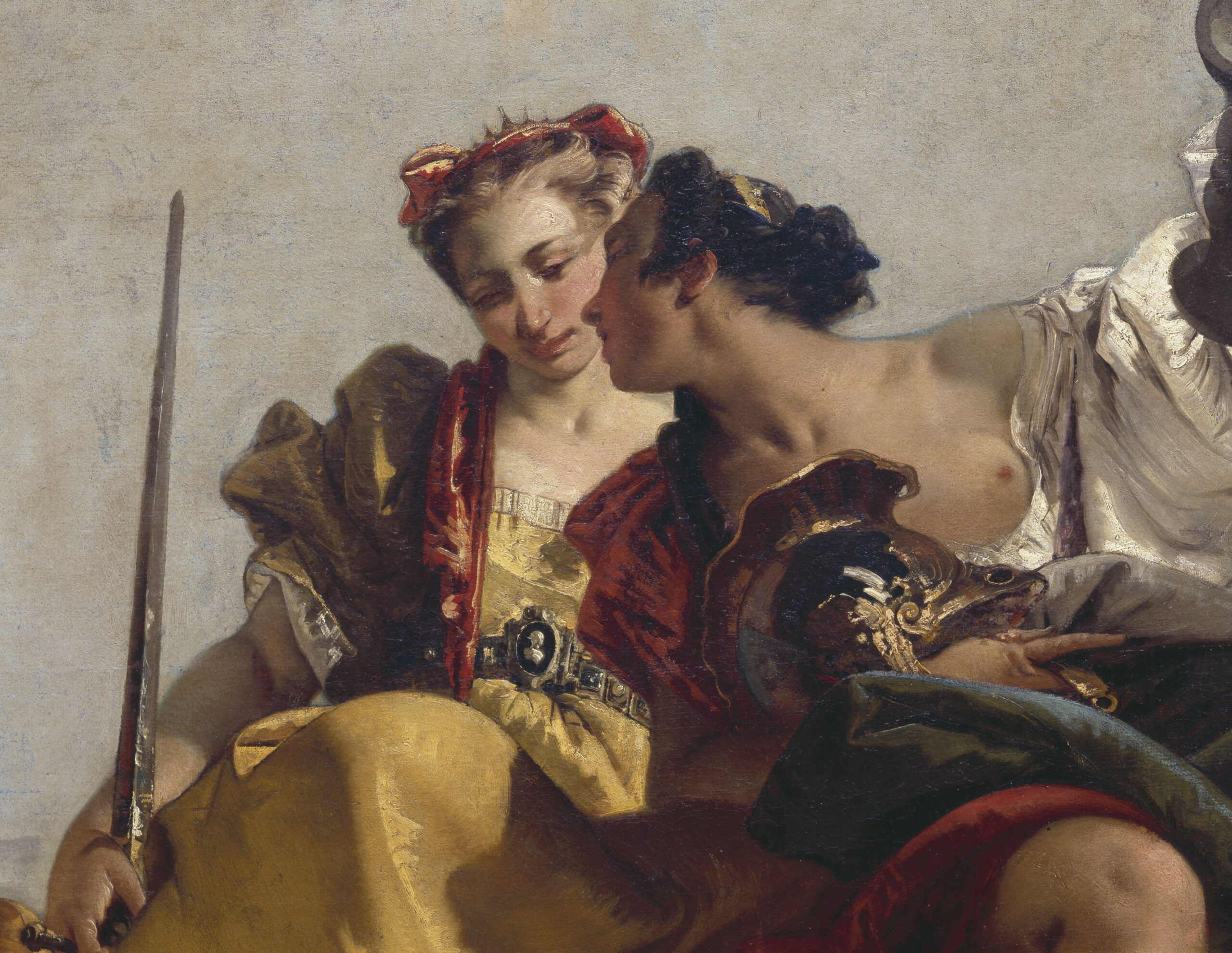
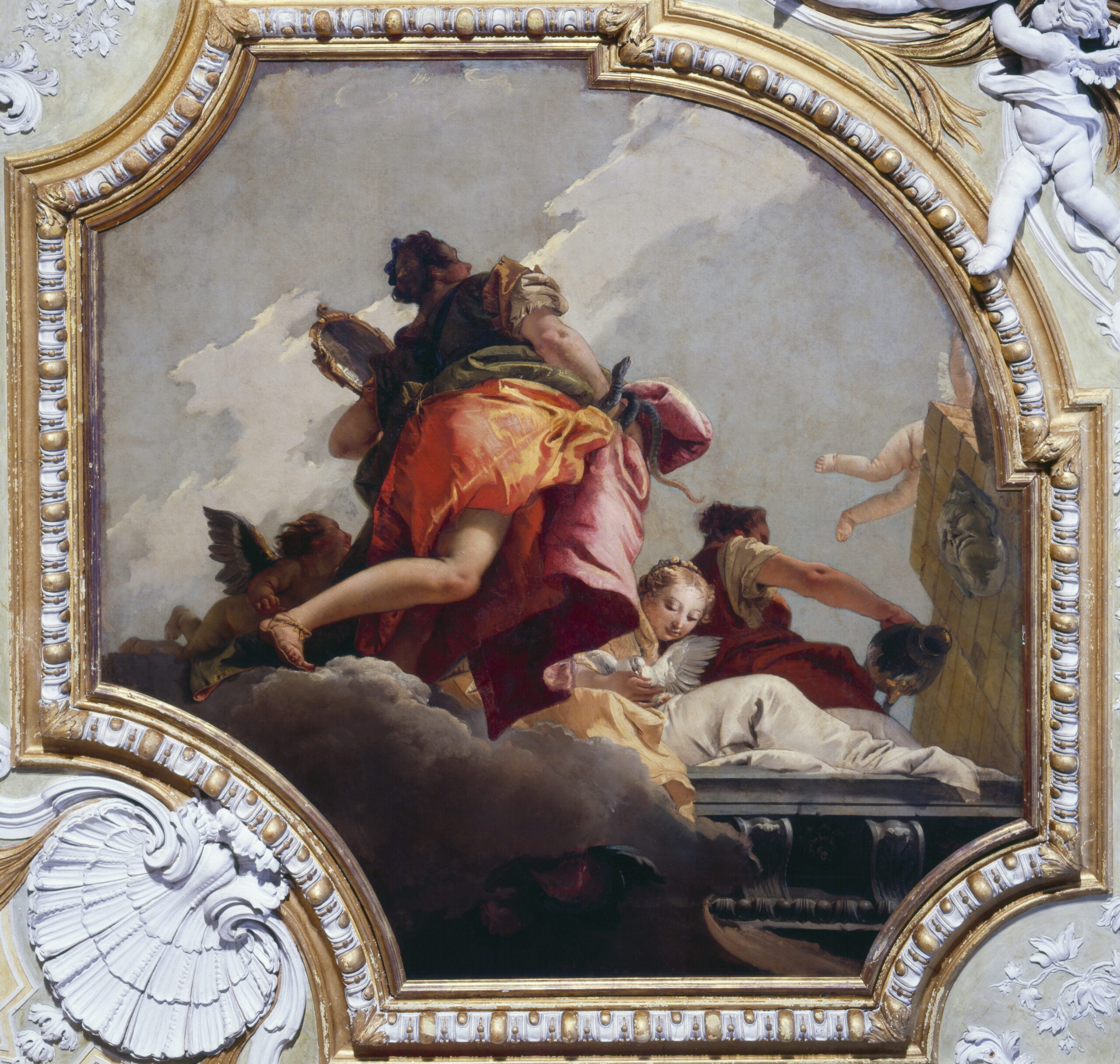
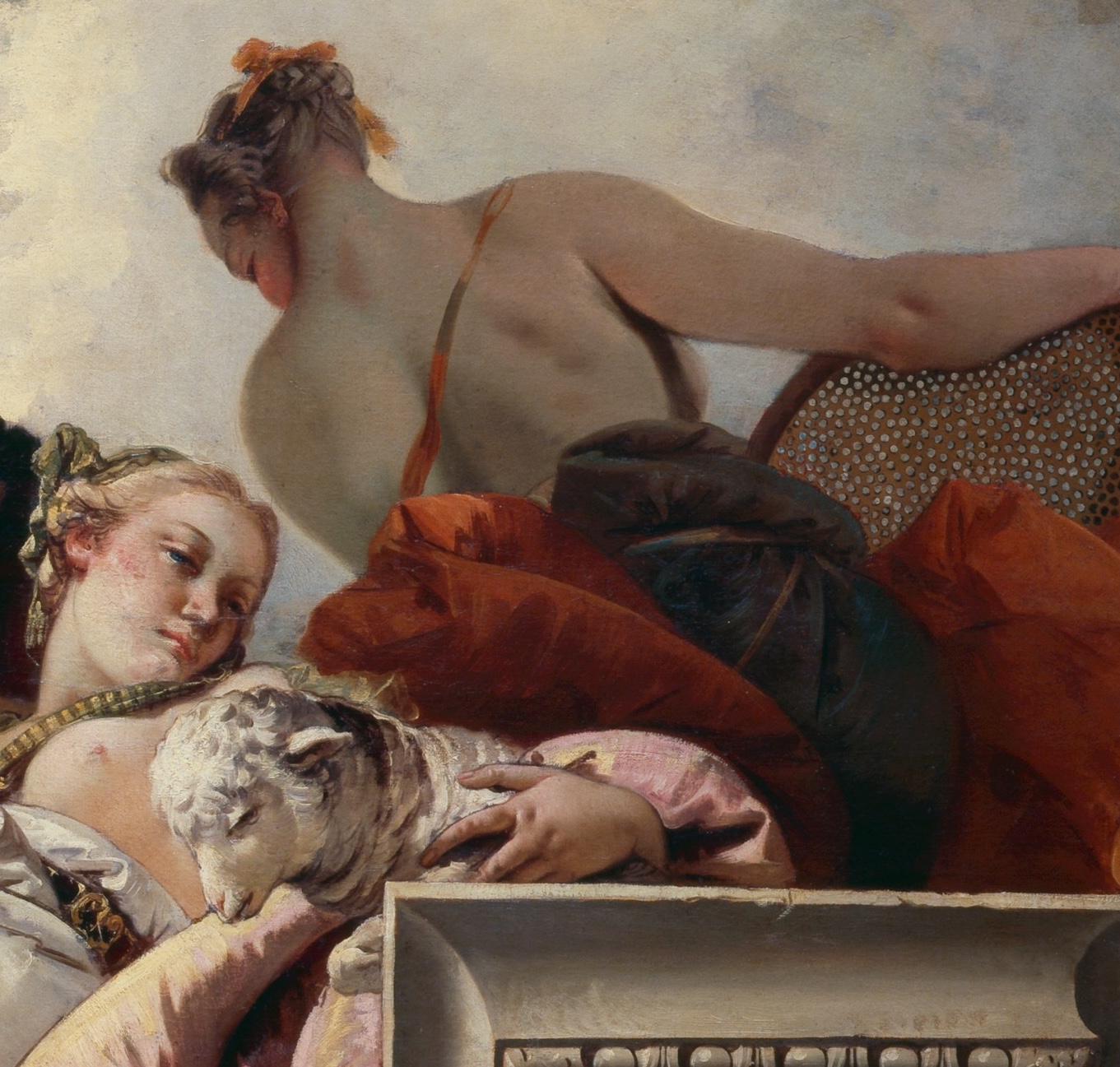
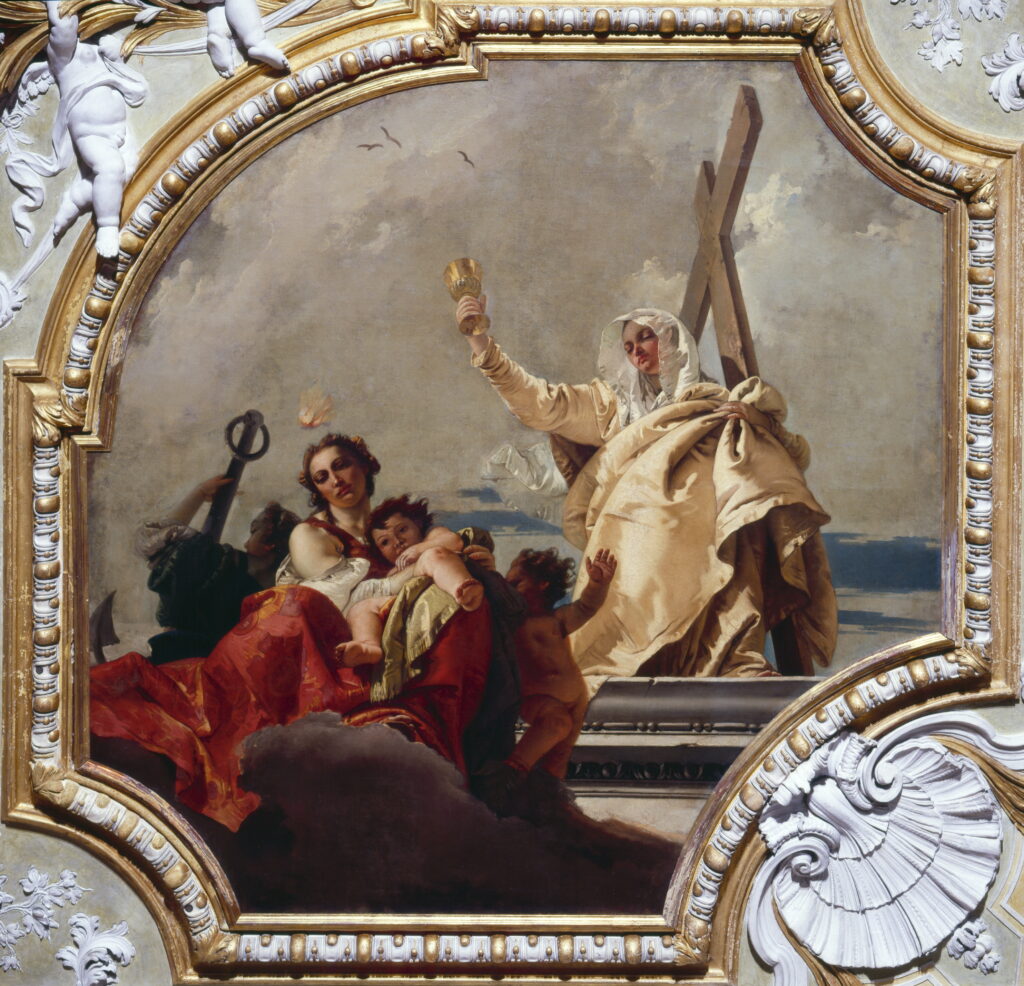
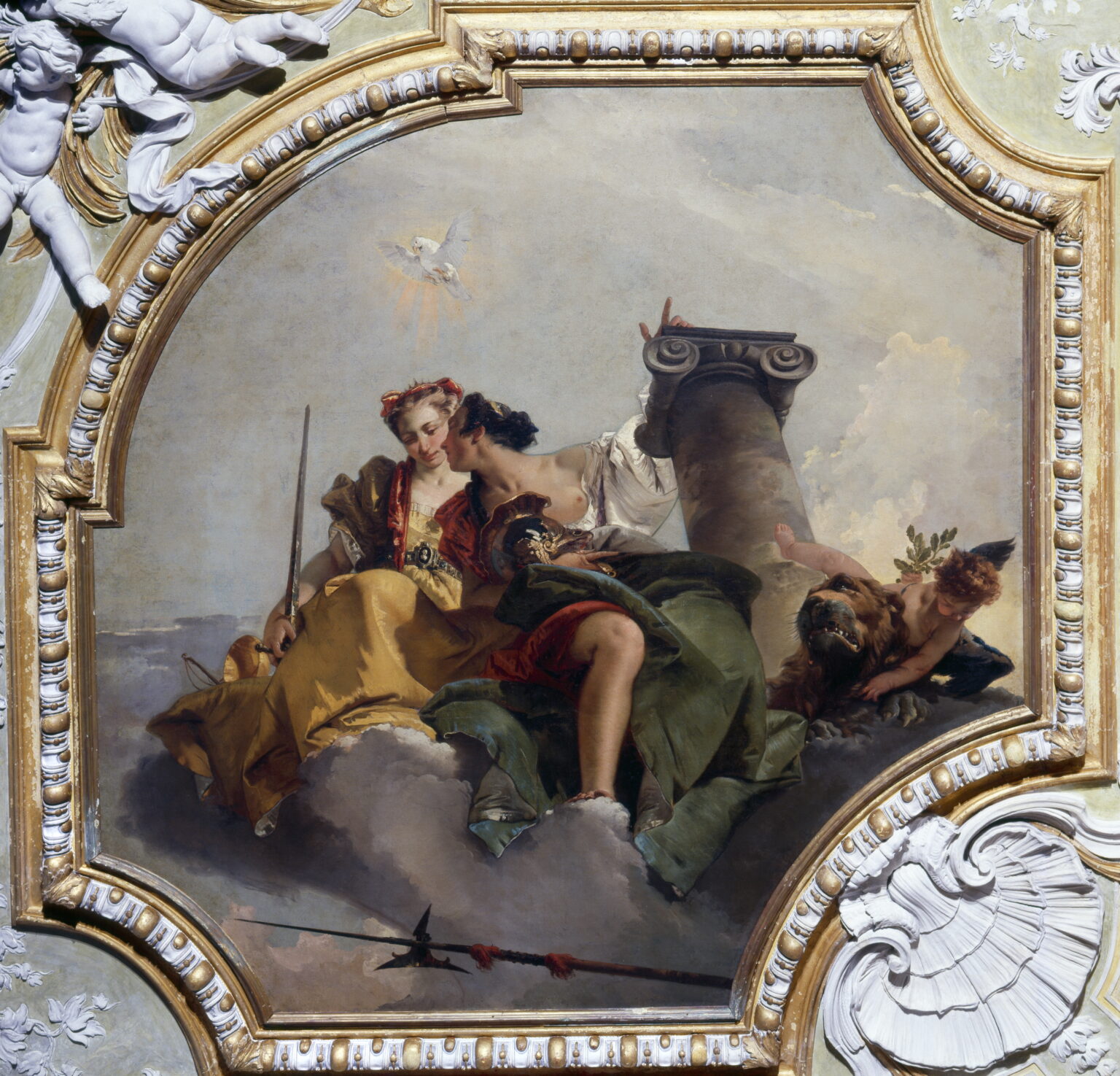
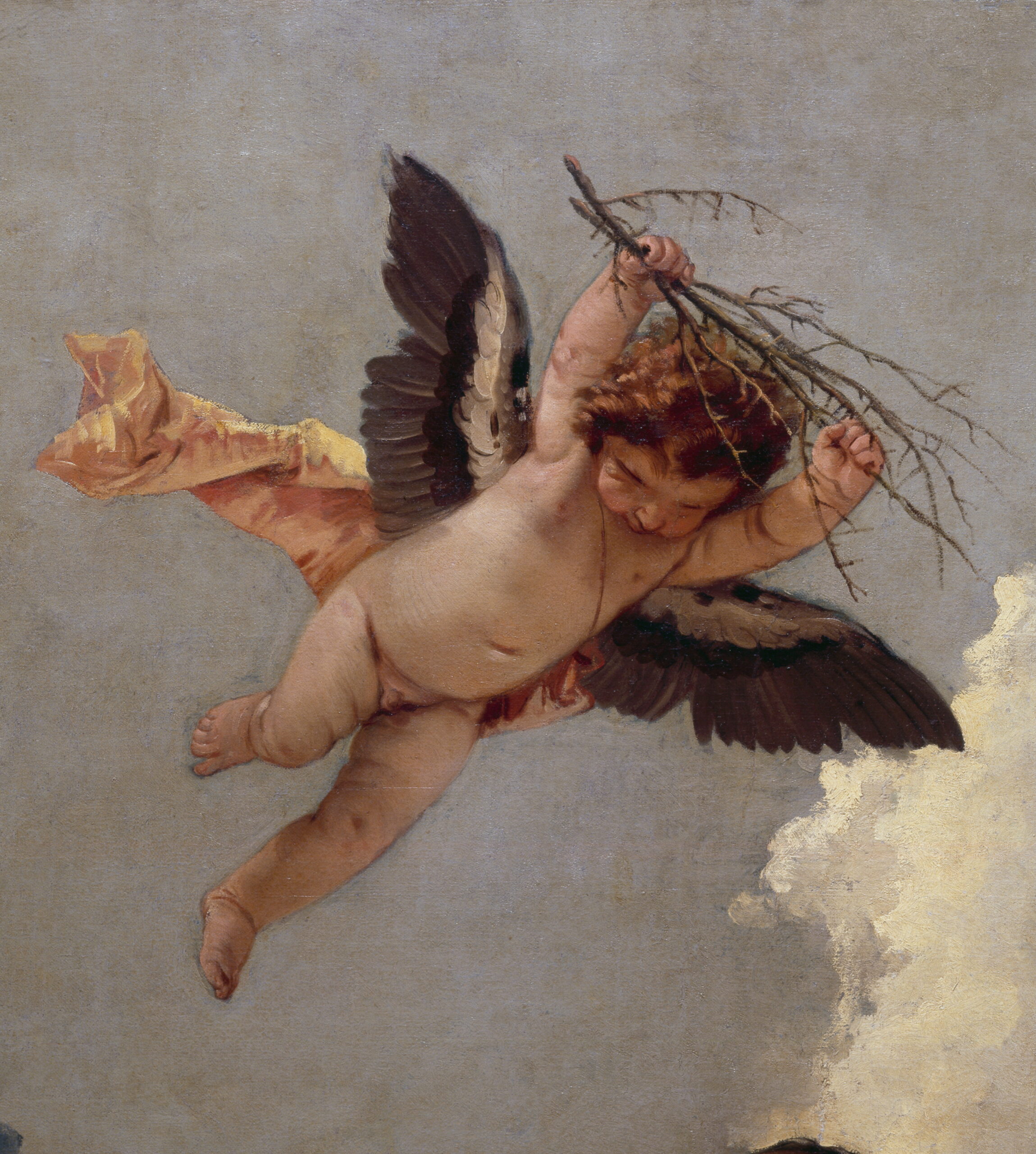
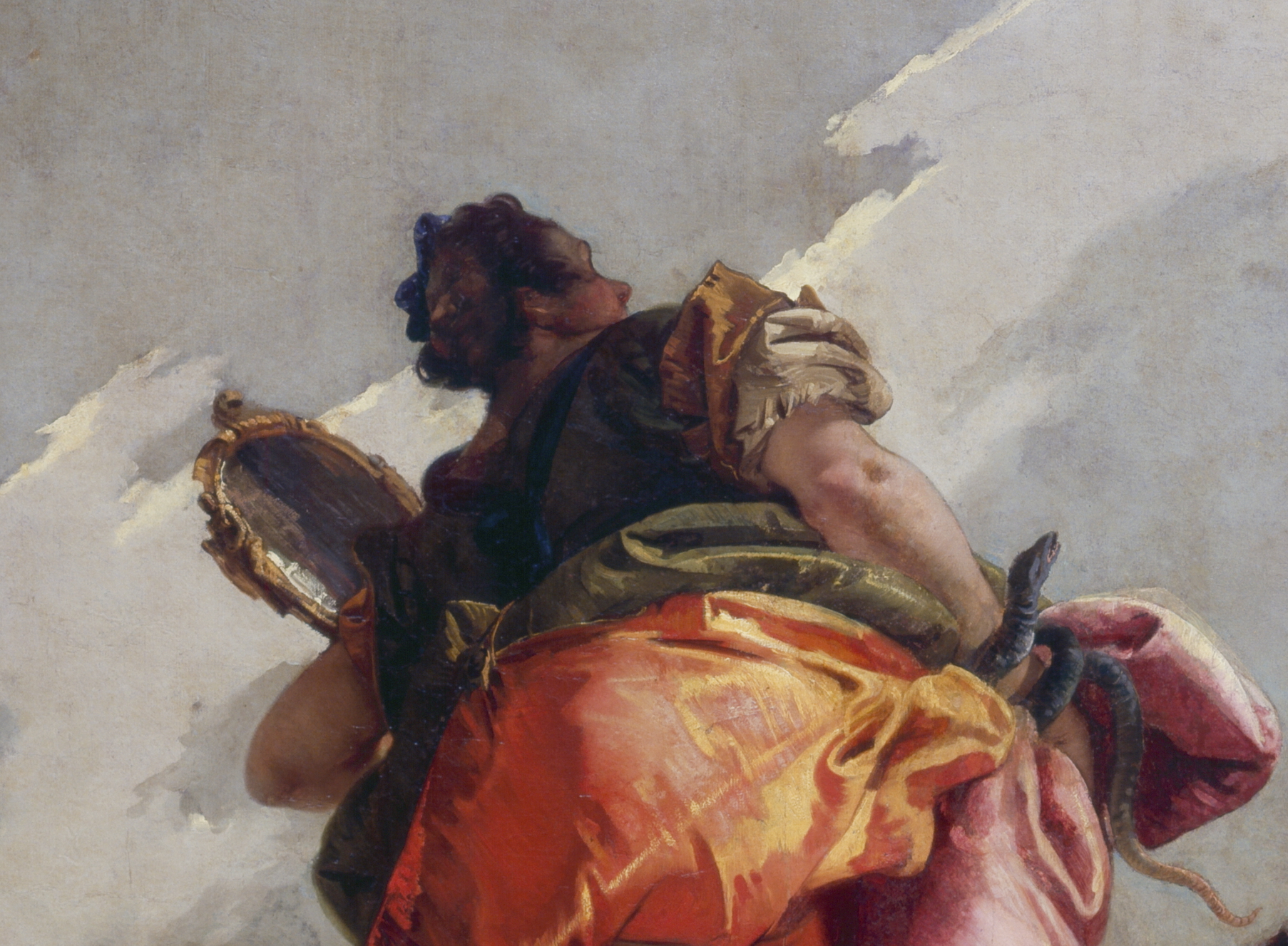
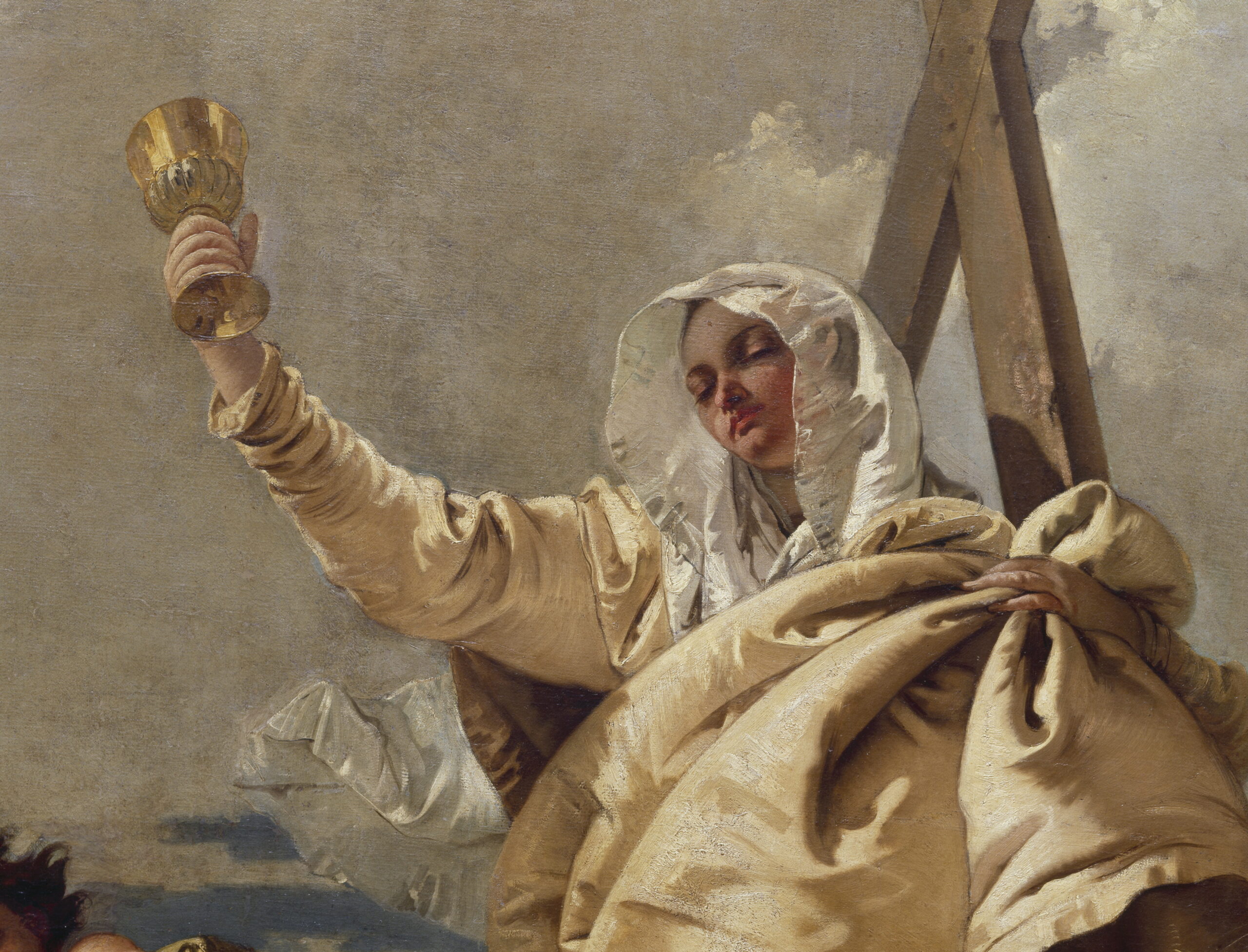
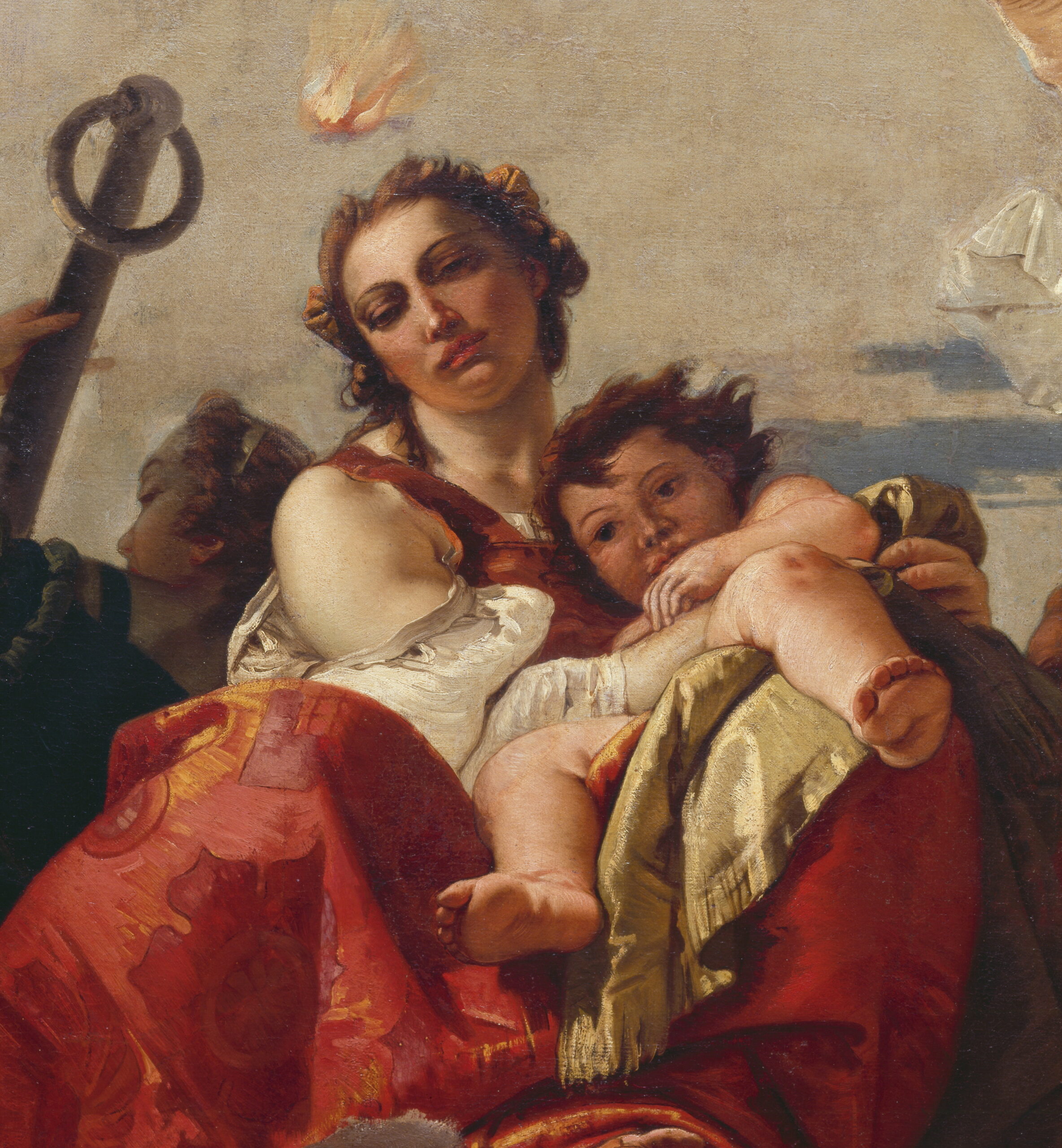
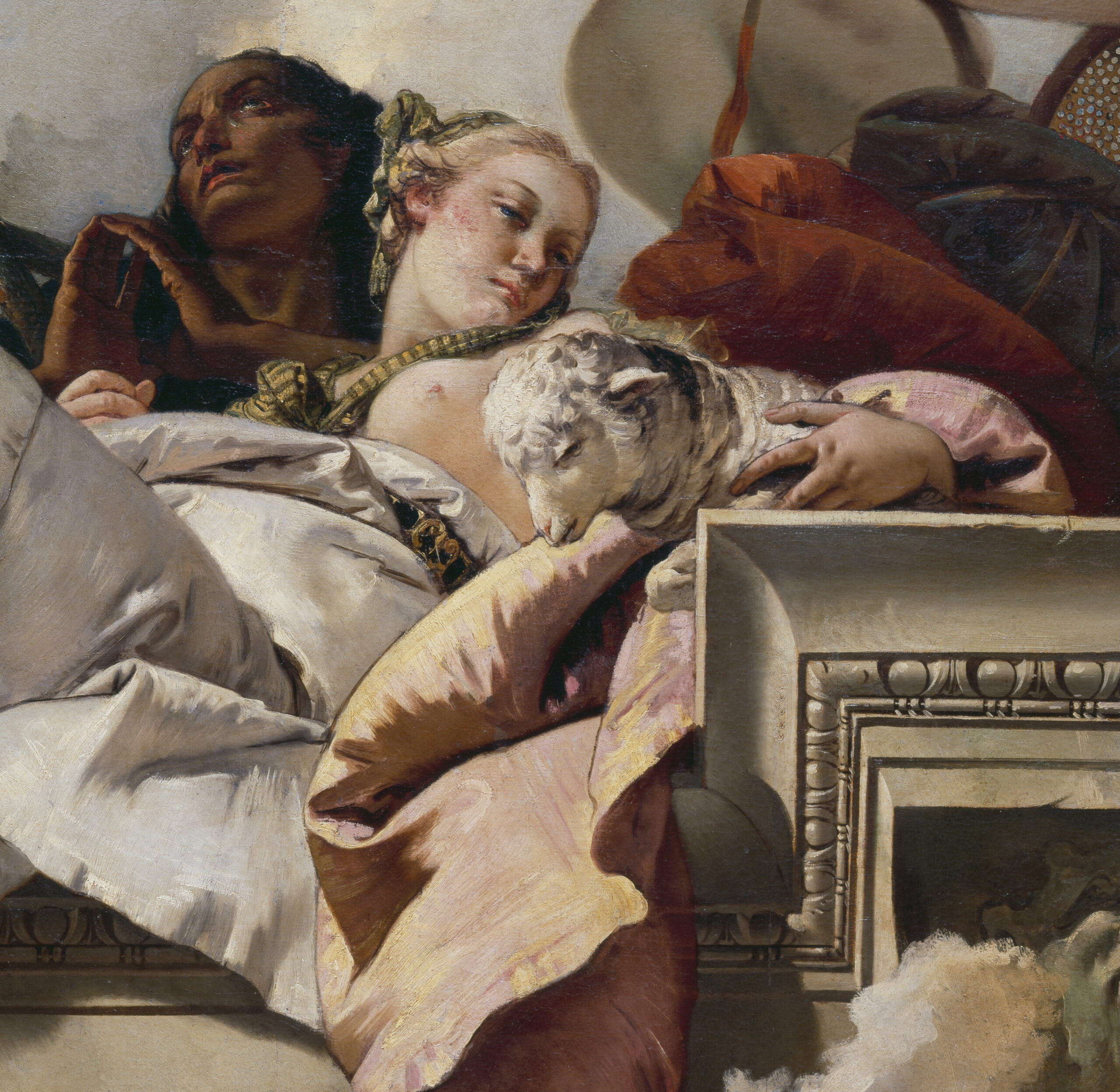
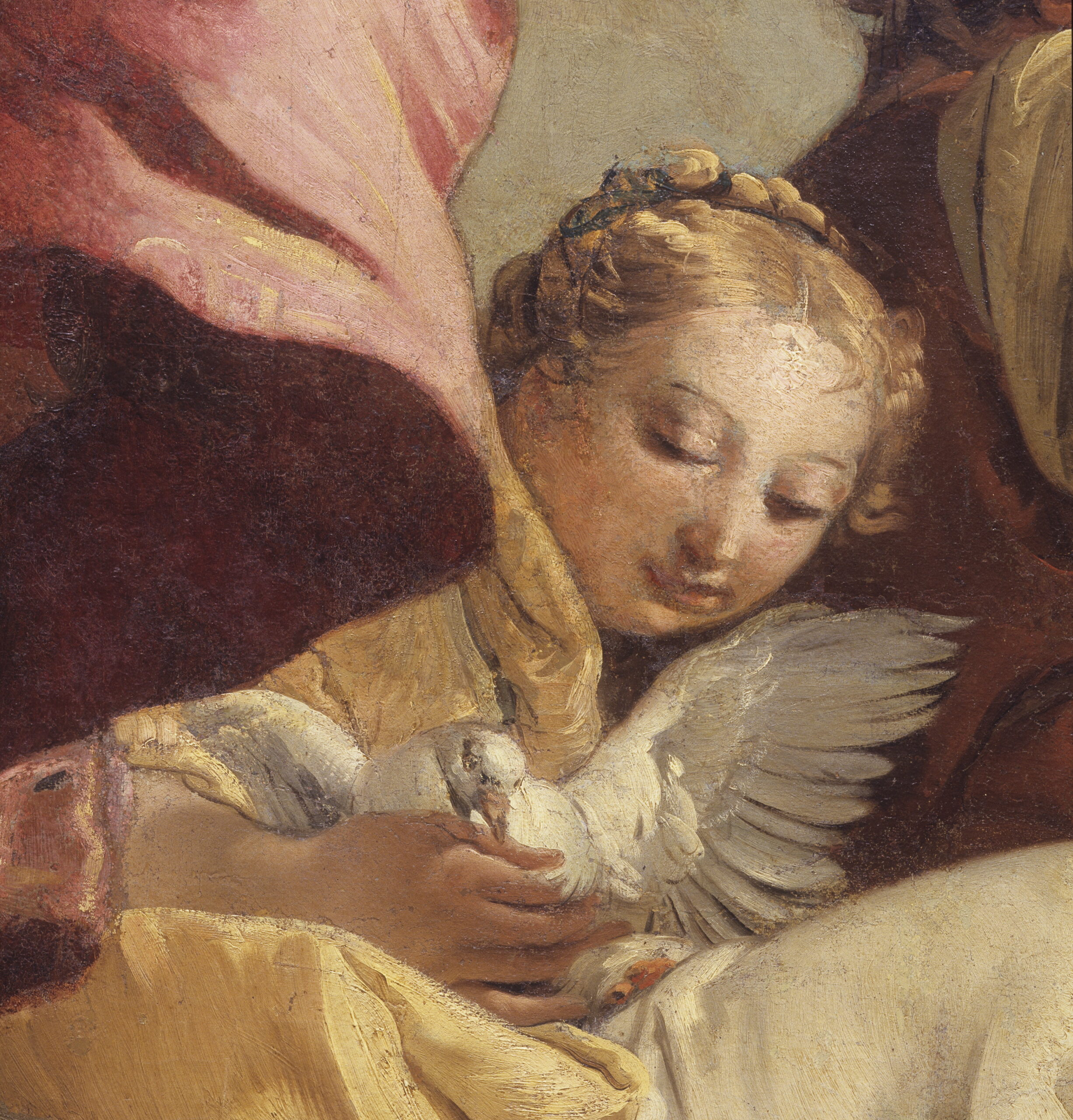
The four corner compartments are dedicated to the Virtues, depicted in groups and in line with traditional iconographic canons. Towards the counter-façade we find: Faith, with the cross and the chalice; Hope, with her back turned, clinging to the anchor; Charity, seated in the foreground, accompanied by two children and with a flame of burning love above her head. In the other corner canvas: Innocence, in the centre, dressed in white with a lamb in her arms; Patience, an elderly woman, half-hidden on the left with a wooden cross beside her, and above her a winged cherub carrying a thorny branch, a reference to penitence; Chastity, on the right, with her back turned and half-naked, holding a sieve. Towards the altar are Justice, dressed in gold, holding a sword, and with the scales depicted in strong foreshortening, and Fortitude, without her traditional armour and with her helmet in her lap, turning her head towards Justice. In the last group, we see Prudence, standing with a double face, holding a mirror in her left hand, while a serpent wraps itself around her right arm; Sincerity, depicted as a young girl dressed in white with a dove in her hands, and Temperance, with her back turned and in the act of pouring water from a jug.
Their characterisation is typical of Tiepolo’s mature use of colour, distinguished by vibrant luminosity and a refined palette. The delicate tones of whites and blues and the shades of greens and pinks emphasise the compositional balance and grace of the Virtues represented.
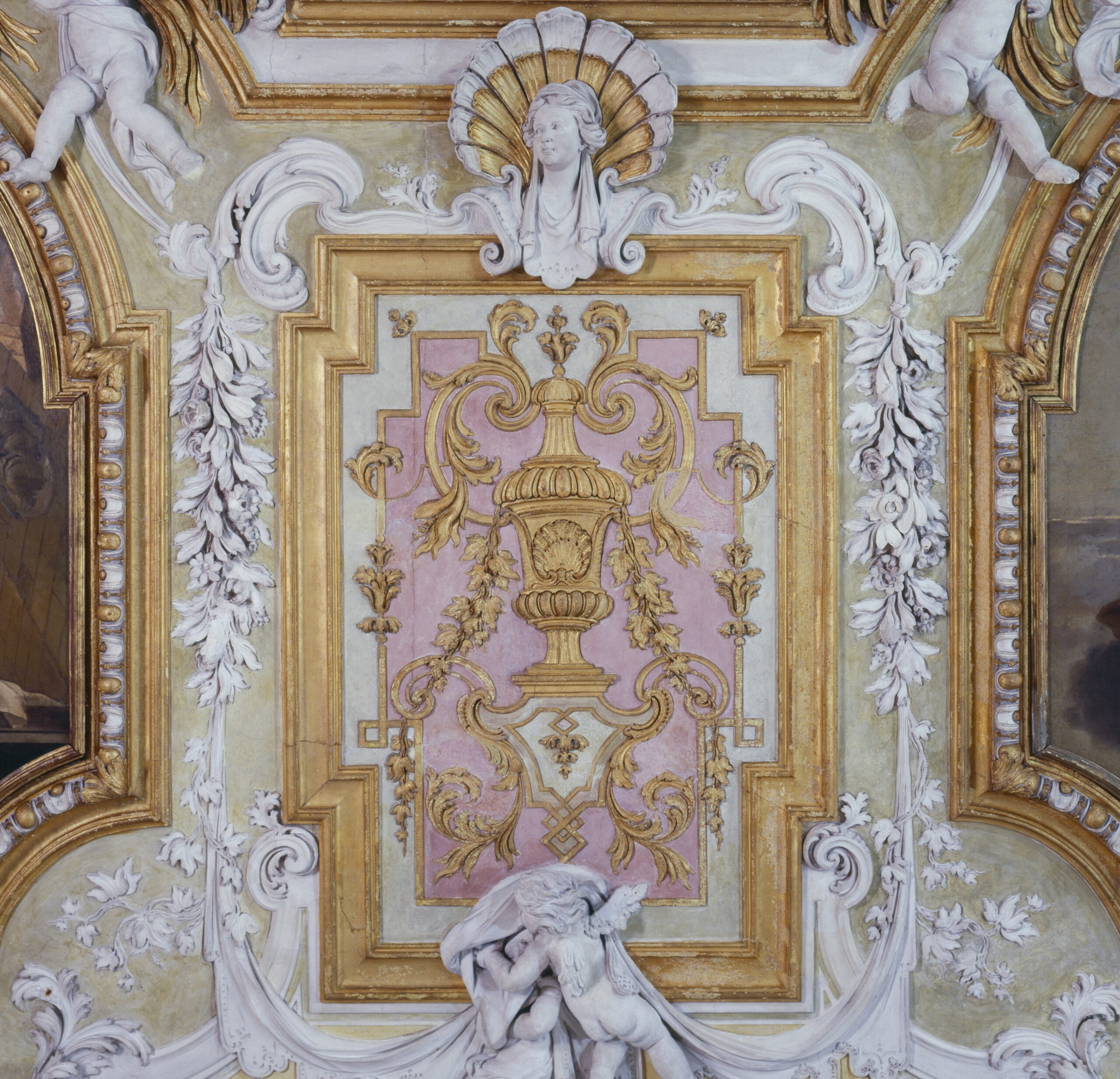
The stucco work realised in 1740 by Abbondio Stazio, which, at Tiepolo’s request, was subsequently coloured and gilded by Carpoforo Mazzetti Tencalla, adds further magnificence and refinement to the whole.