Sala dell'Archivio

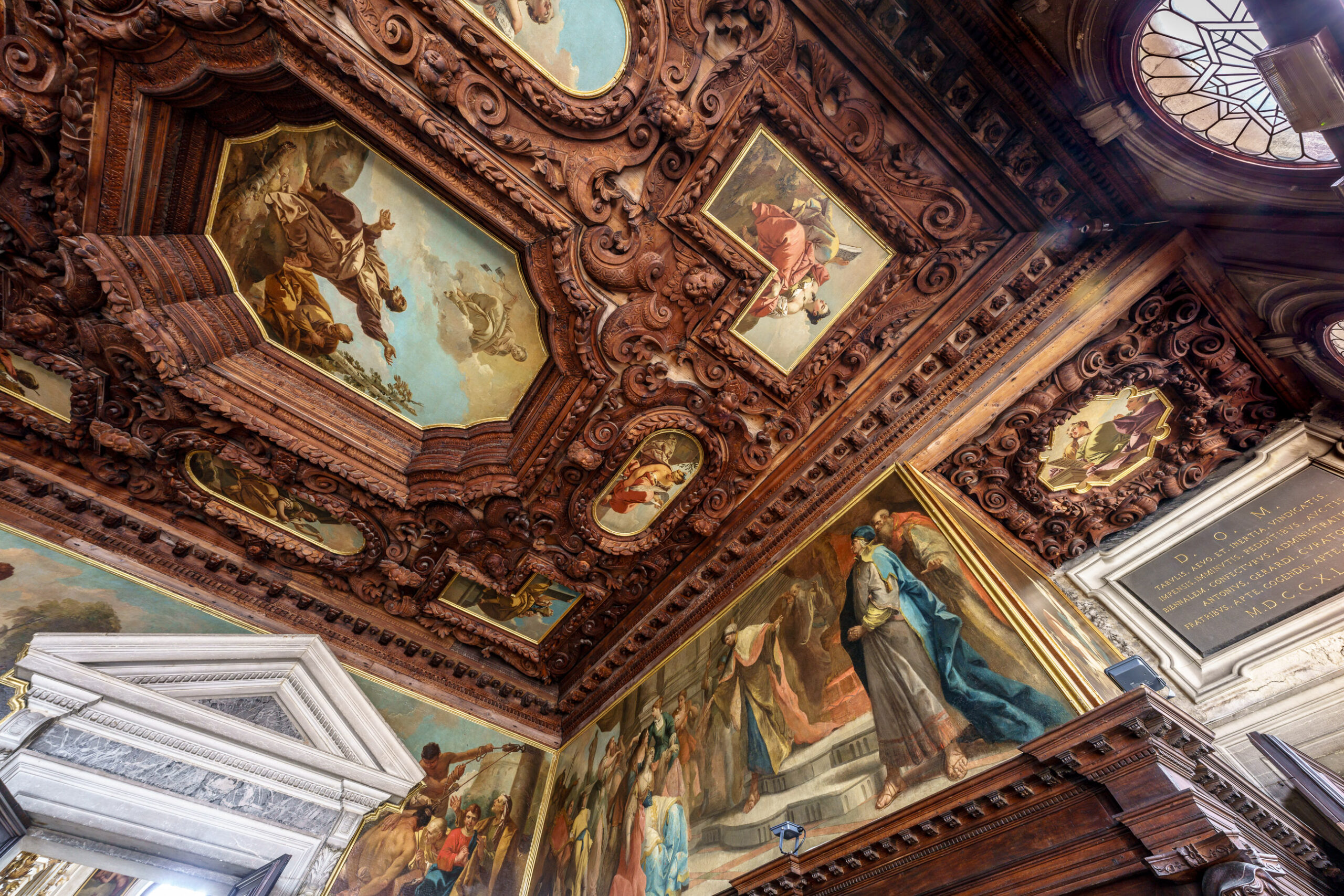
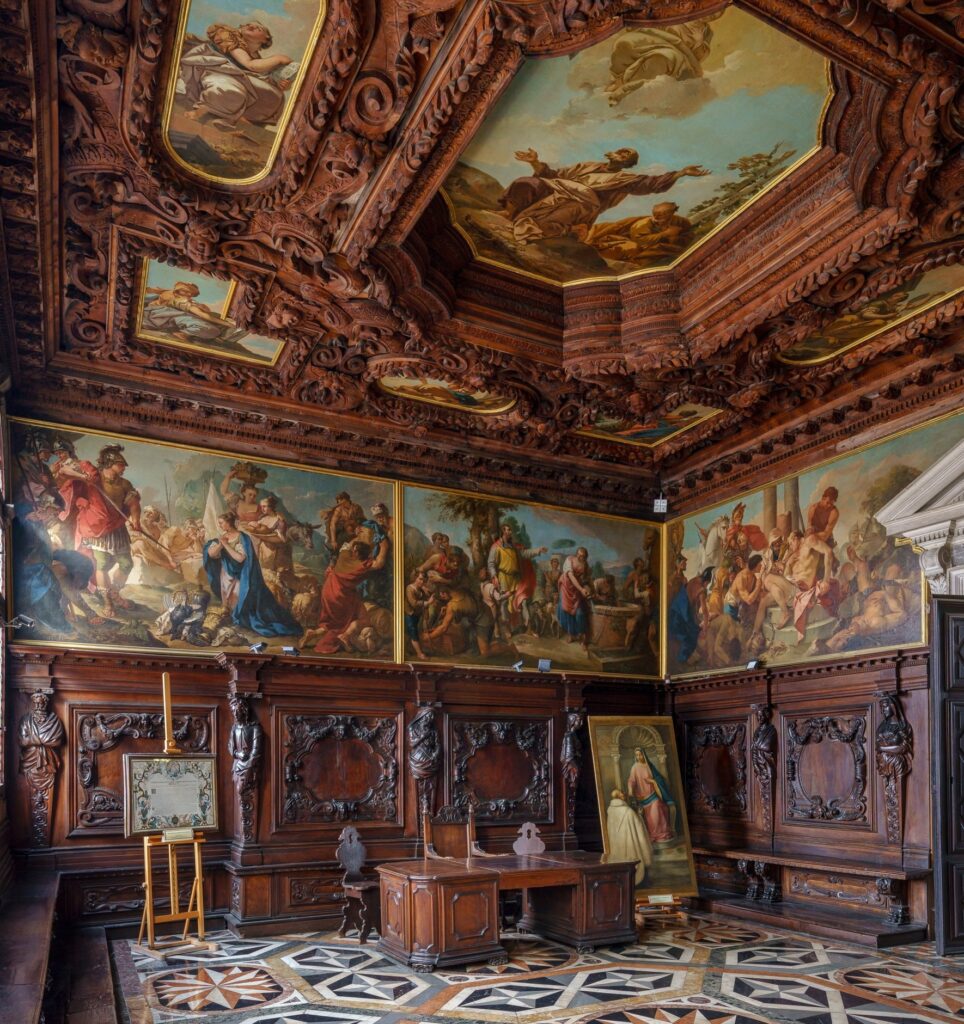
The Sala dell’Archivio is a bright, open-plan room, richly adorned with precious furnishings and paintings. A continuous row of windows opens out onto Campo dei Carmini.

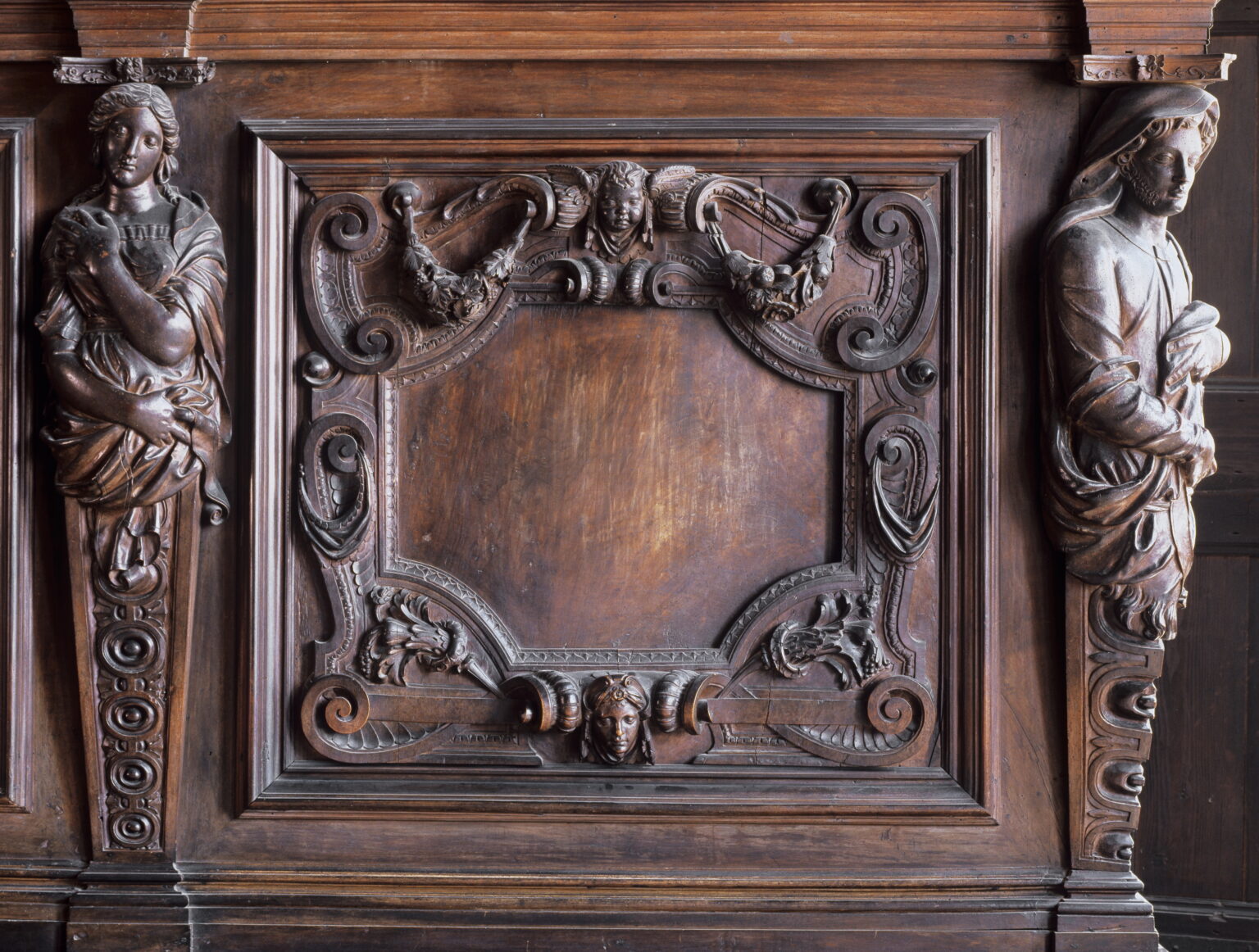
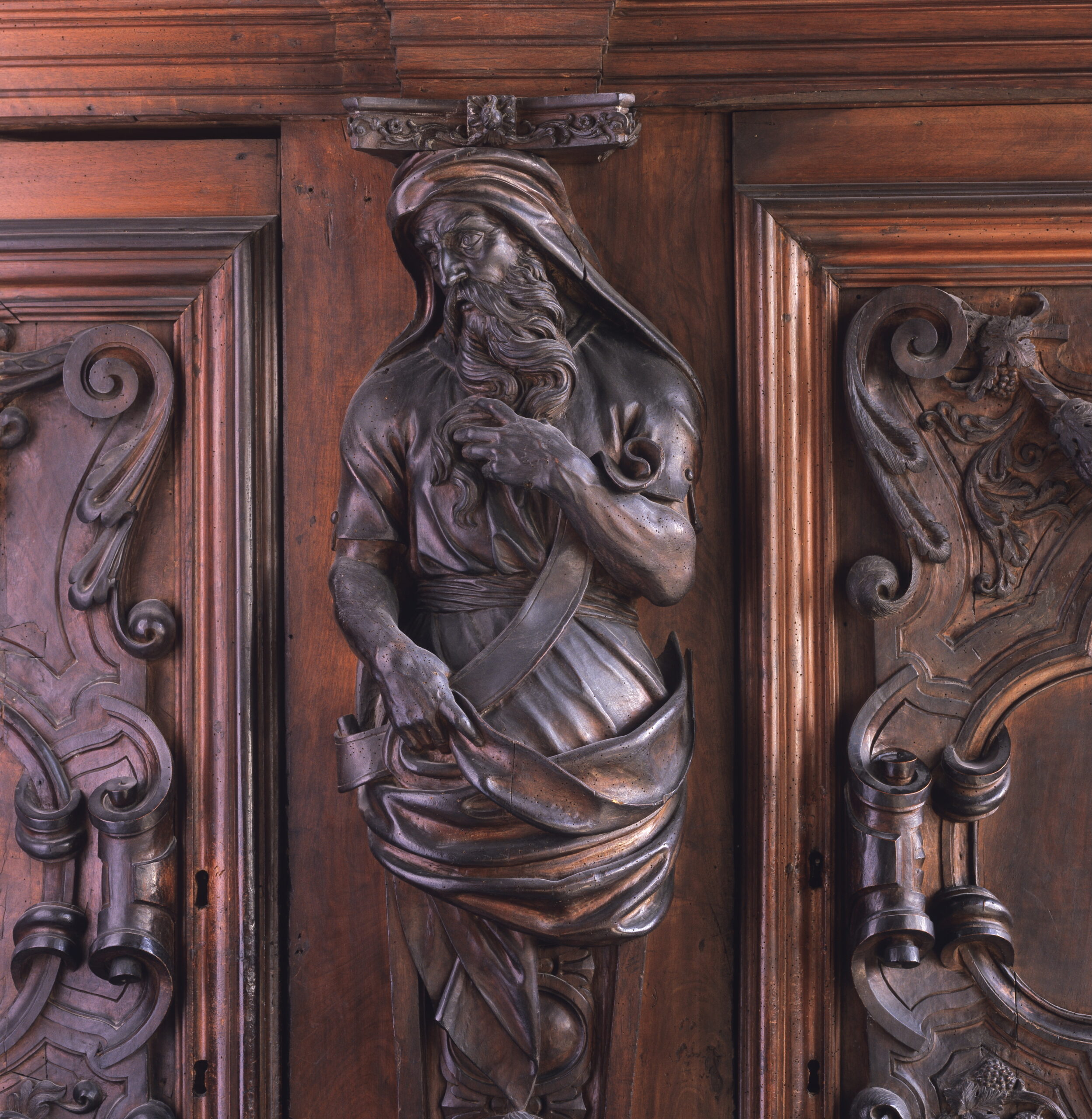
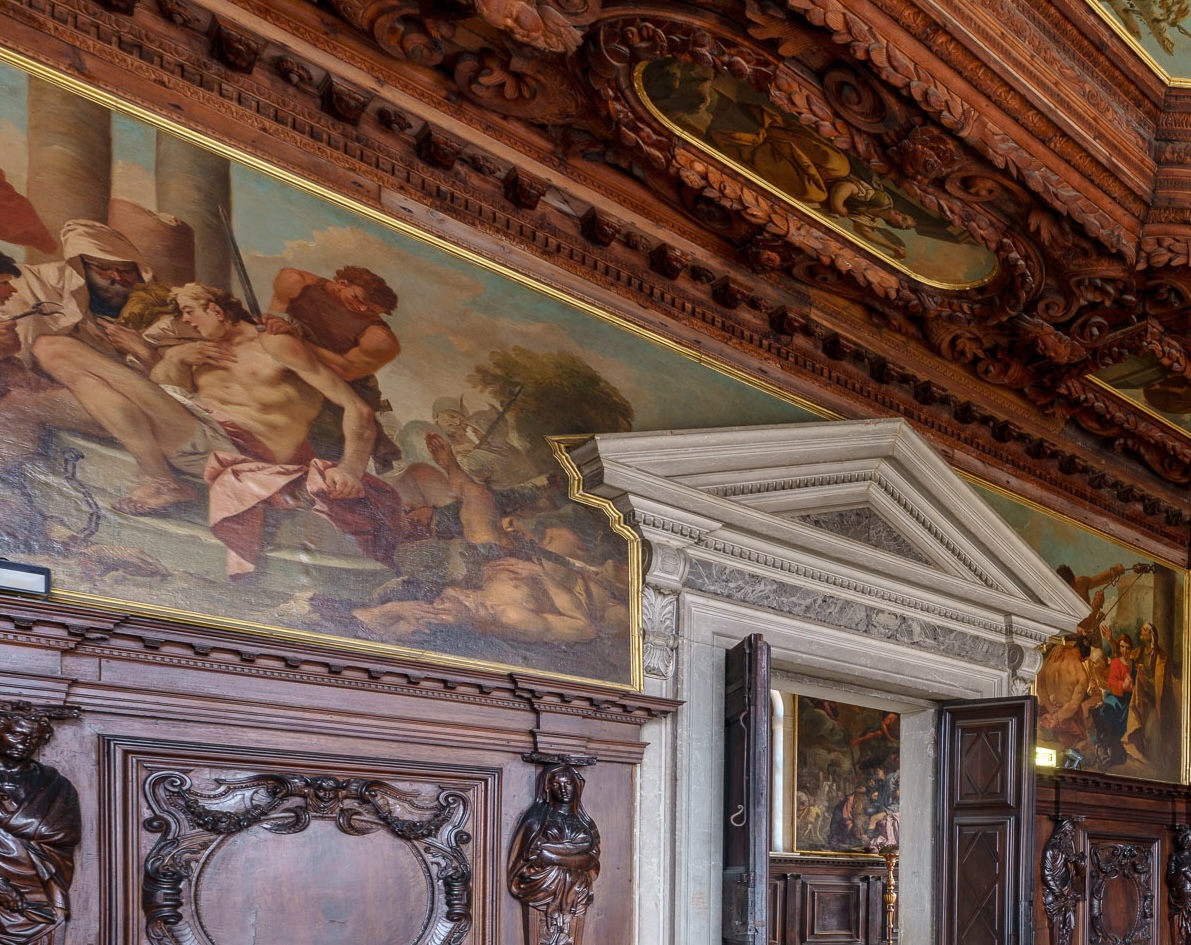
The walnut panelling, attributed to Giacomo Piazzetta, which runs along the walls is of remarkable quality. It is punctuated by twelve male and female caryatids, sculpted almost in the round, representing prophets and protagonists of episodes from the Old Testament. Decorated with frames with festoons and volutes, the panels give the complex a great decorative richness. Behind the desk there is an impressive cabinet, once used to store the documents of the Scuola. This precious piece of furniture, from which the room takes its name, still attests to the centrality of its functions today.

The pictorial decoration is one of the most unified in the entire building. The iconographic programme, conceived by Gaetano Zompini, has as its theme the celebration of the ‘Greatness and Glory of the Queen of Heaven’ and the ‘Devout Congregation that worships the Virgin under the title of Carmelite’. 

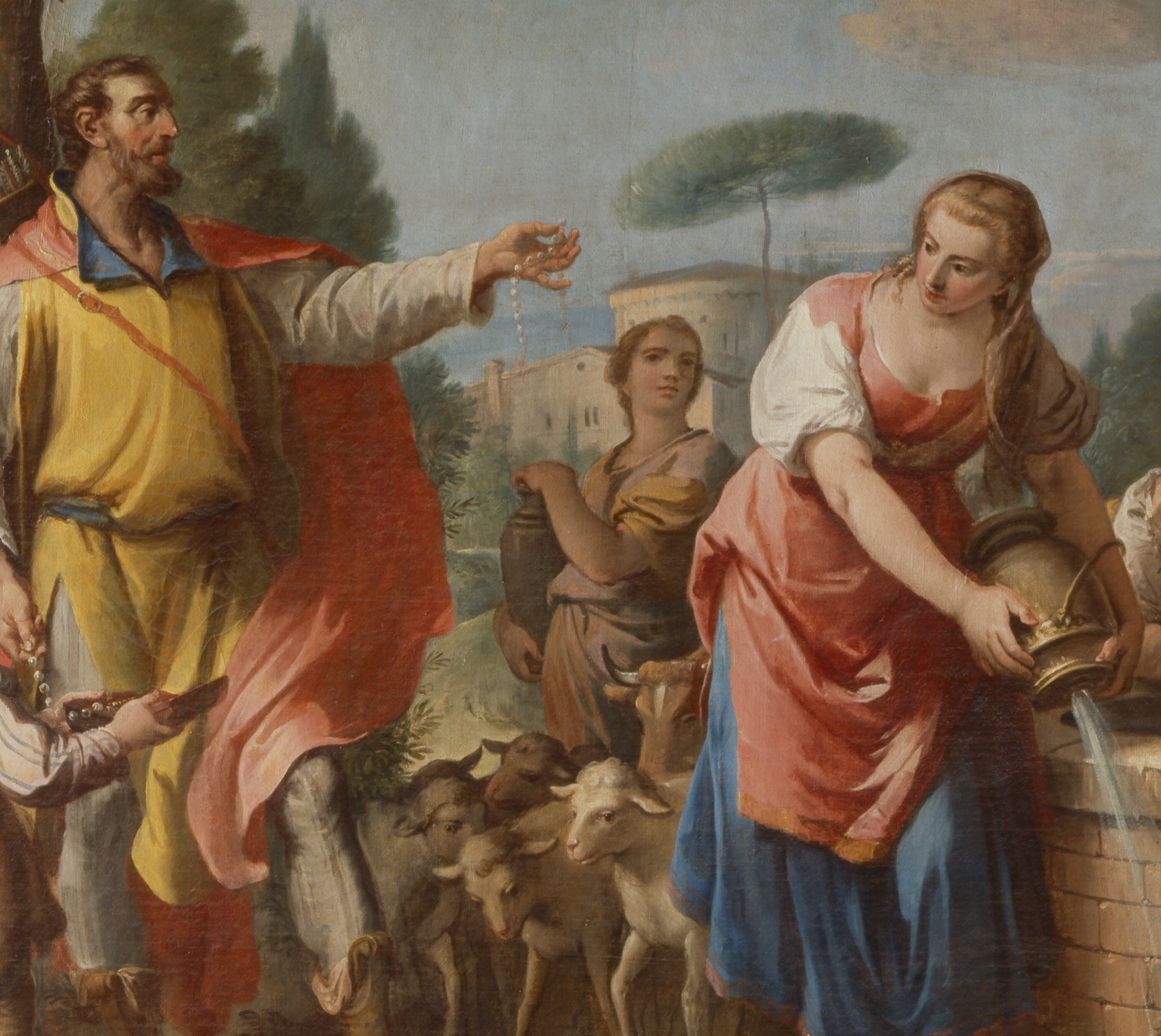
The paintings on the walls, realised between 1749 and 1753, partly by Zompini himself but mainly by Giustino Menescardi, narrate episodes from the Old Testament linked to female characters who prefigure the Virgin Mary. The narrative unfolds clockwise along the three interior walls of the hall, interweaving biblical storytelling with symbolic meanings, and extolling the virtues of courage, faith and devotion of the female protagonists.

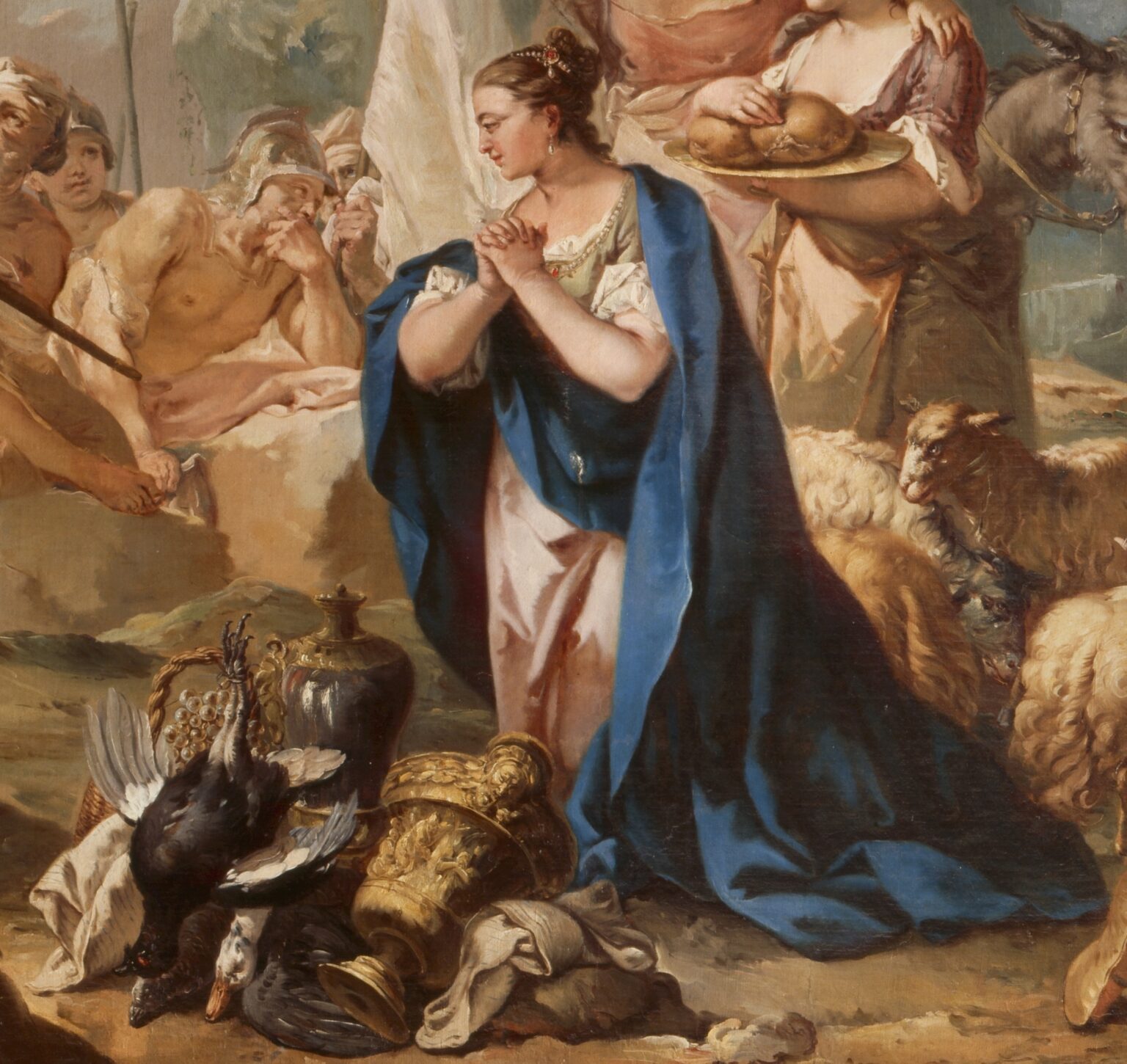
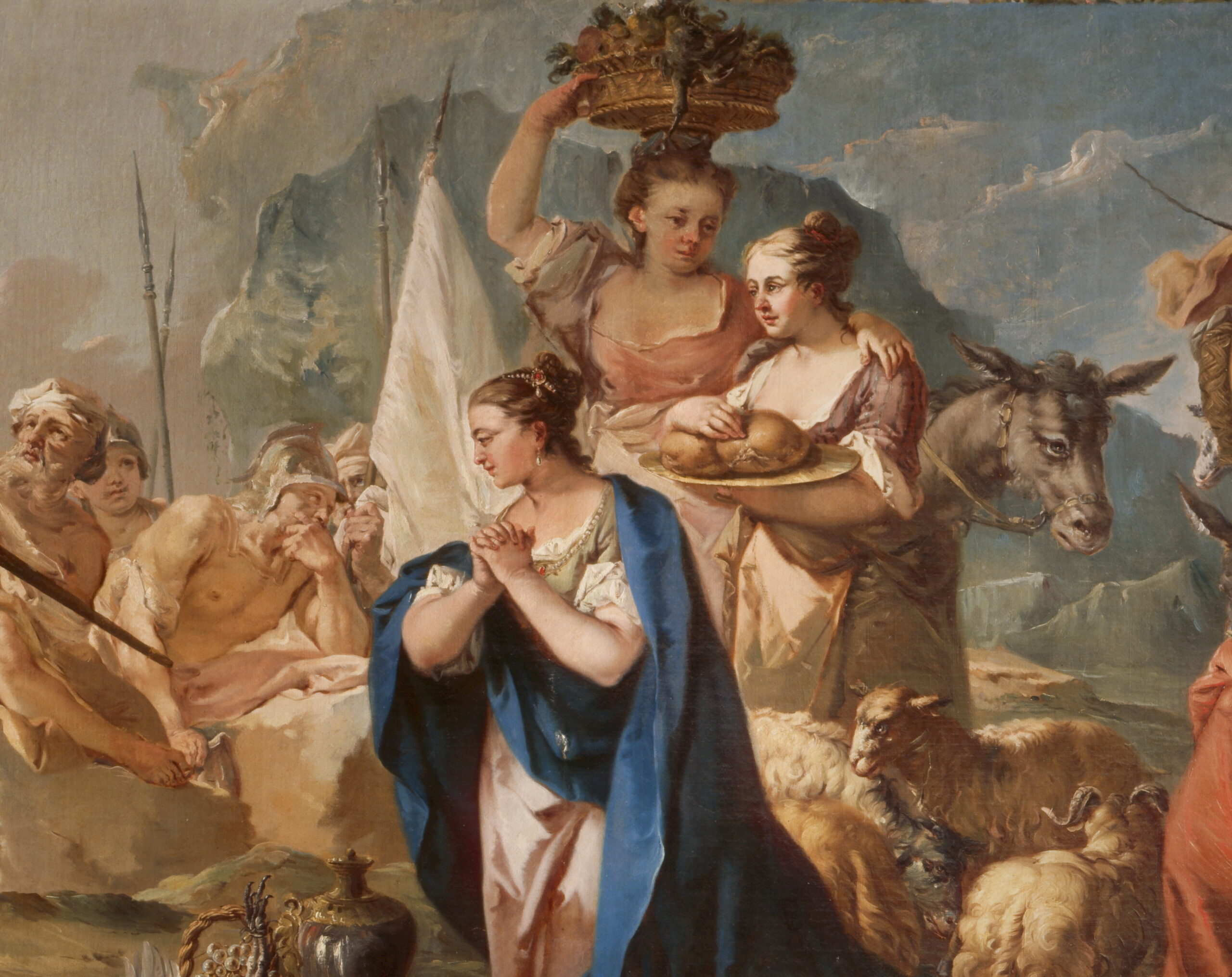
Proceeding clockwise, next to the window is Menescardi’s Abigail’s Offering: the woman, with wisdom and humility, appeases David’s wrath by offering gifts and words of peace; she thus becomes, in Christian tradition, a reflection of Mary, the mediator. Next is Rebecca at the Well by Gaetano Zompini: the encounter with Eliezer is interpreted as a foreshadowing of the Annunciation, and the marriage to Isaac as a symbol of the union between Mary and Joseph.

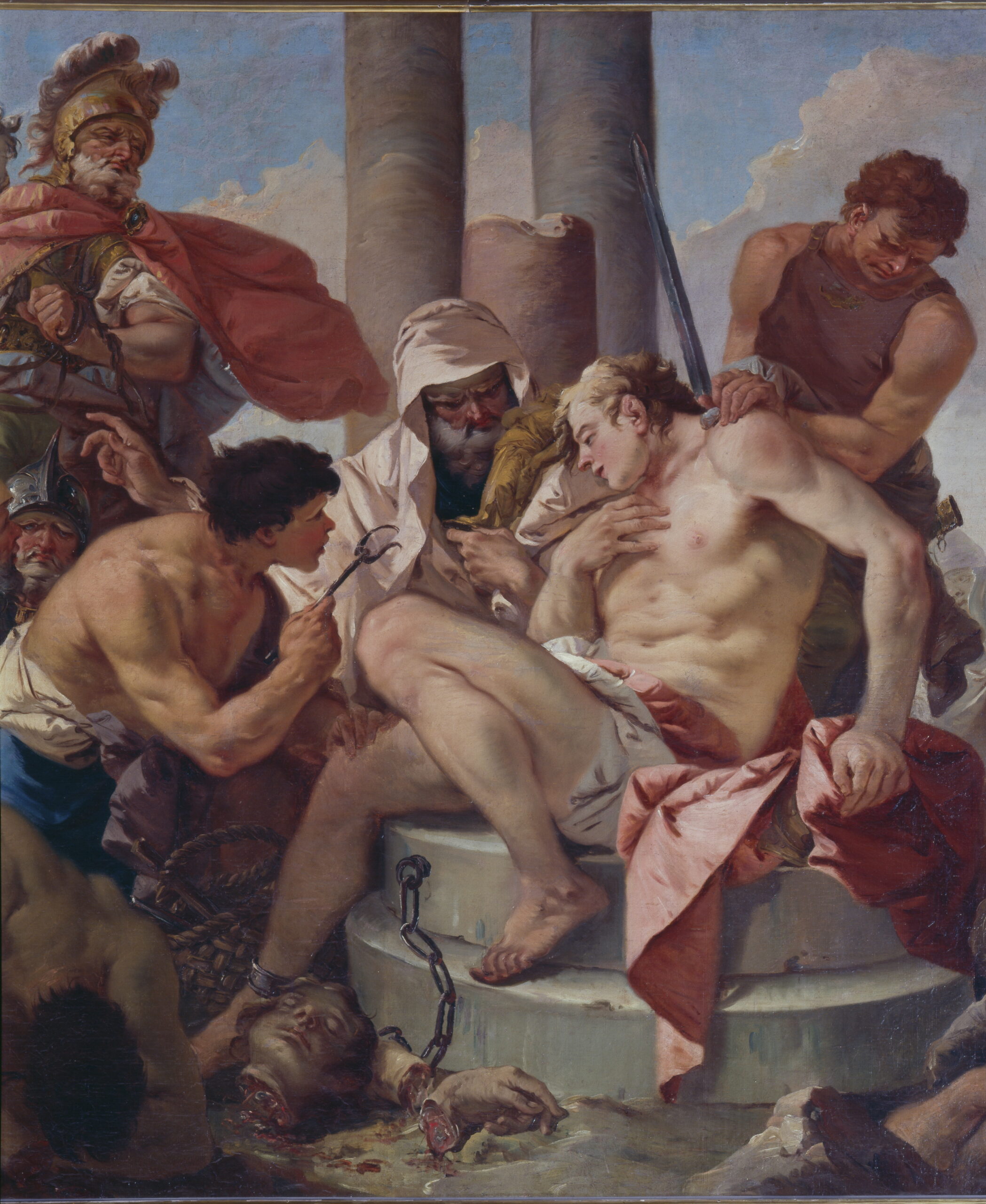
The large canvas, also by Menescardi, depicting The Martyrdom of the Maccabees frames the doorway to the Sala Capitolare; the depiction of the atrocious killing of the seven brothers before their mother evokes Mary’s grief at the foot of the Cross.

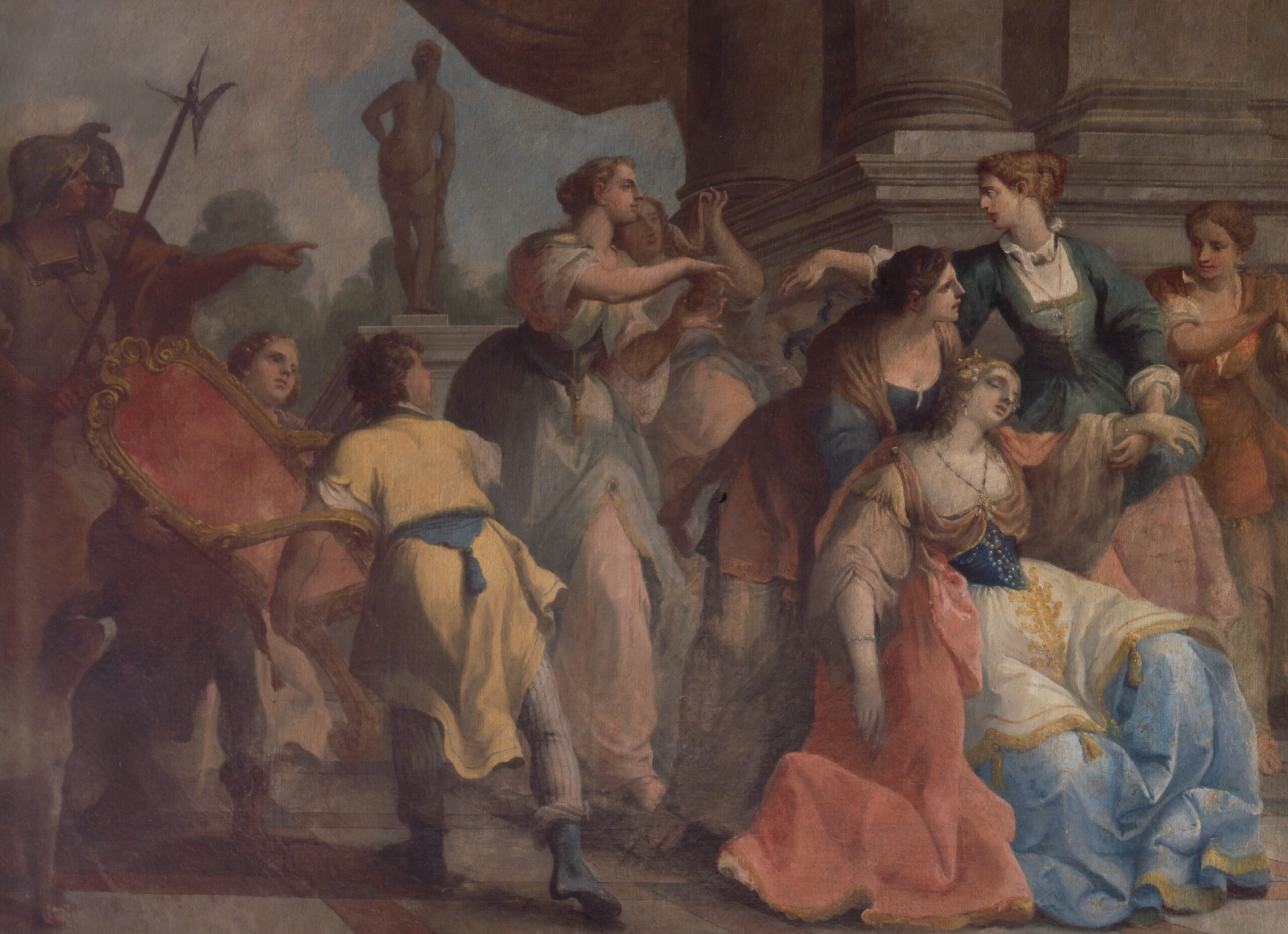
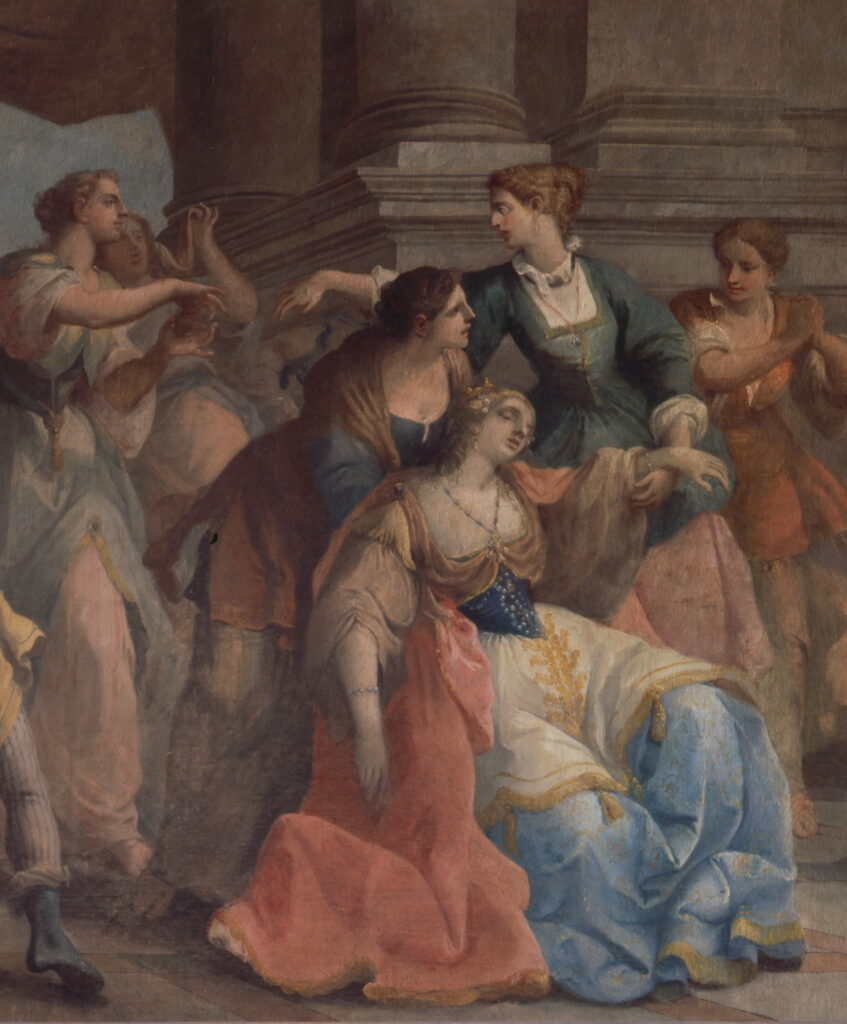
The wall facing the Sala dell’Albergo is dominated by Esther Faints before Ahasuerus by Zompini. The biblical heroine who intercedes for her people and is overcome by fainting, moves the king to compassion, and she too is regarded as a prefiguration of Mary, the mediator of salvation.

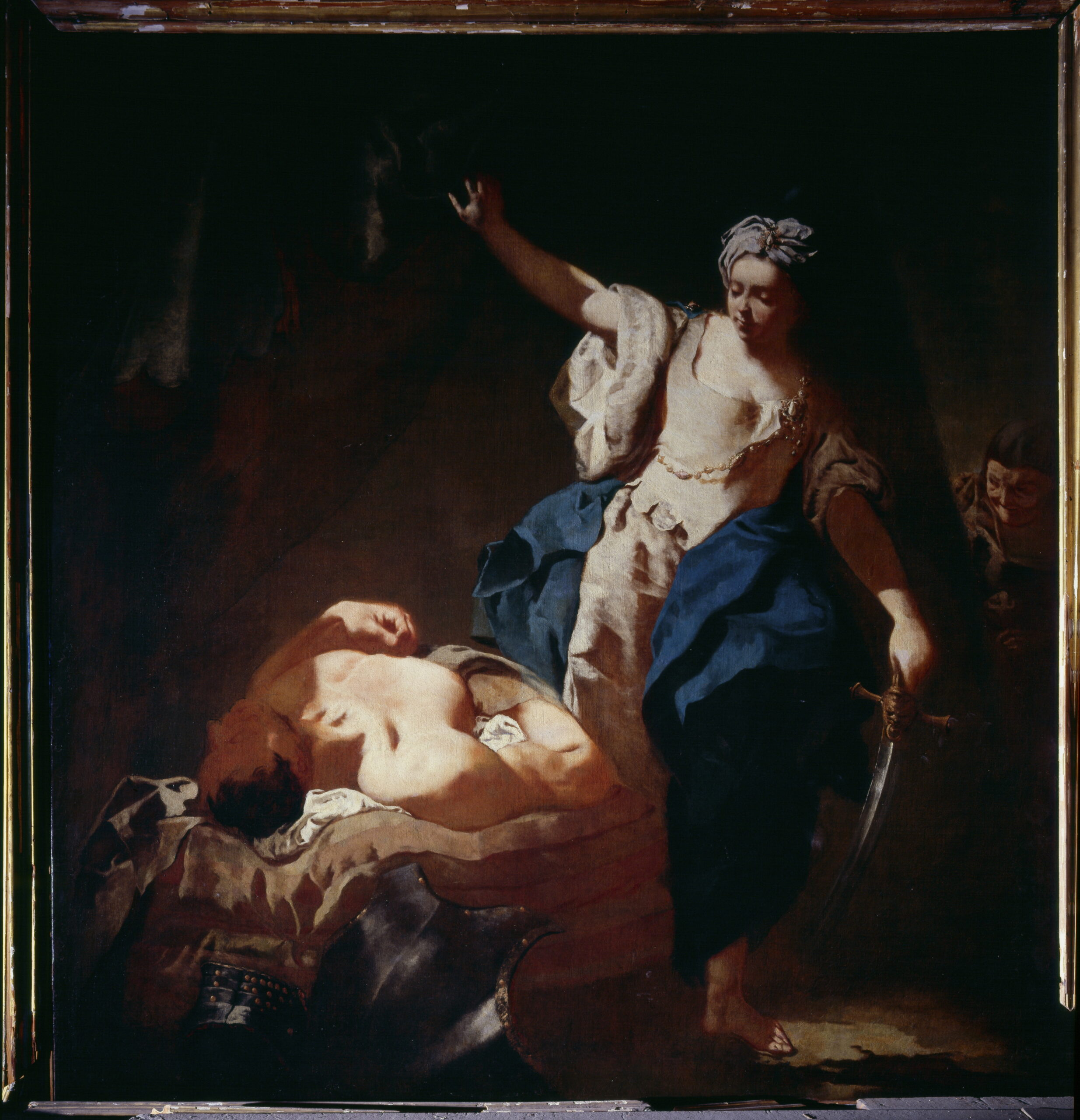
Next to the door leading to the Sala dell’Albergo is Judith and Holofernes, a masterpiece by Giambattista Piazzetta: the young woman, symbol of Virtue triumphing over Evil and an image of Mary triumphant over sin, is captured in the moment just before the enemy’s decapitation, in a nocturnal scene charged with dramatic tension.

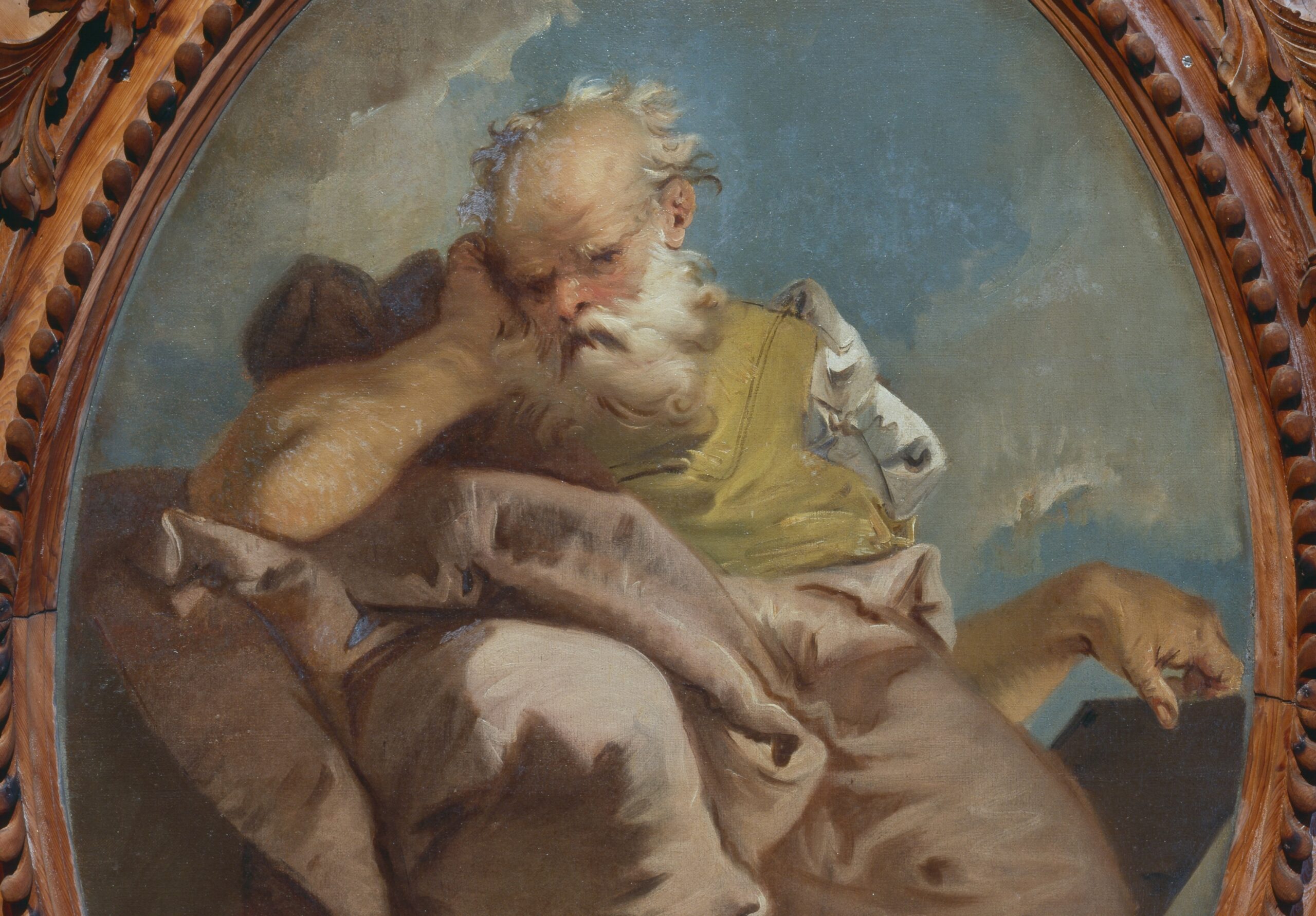
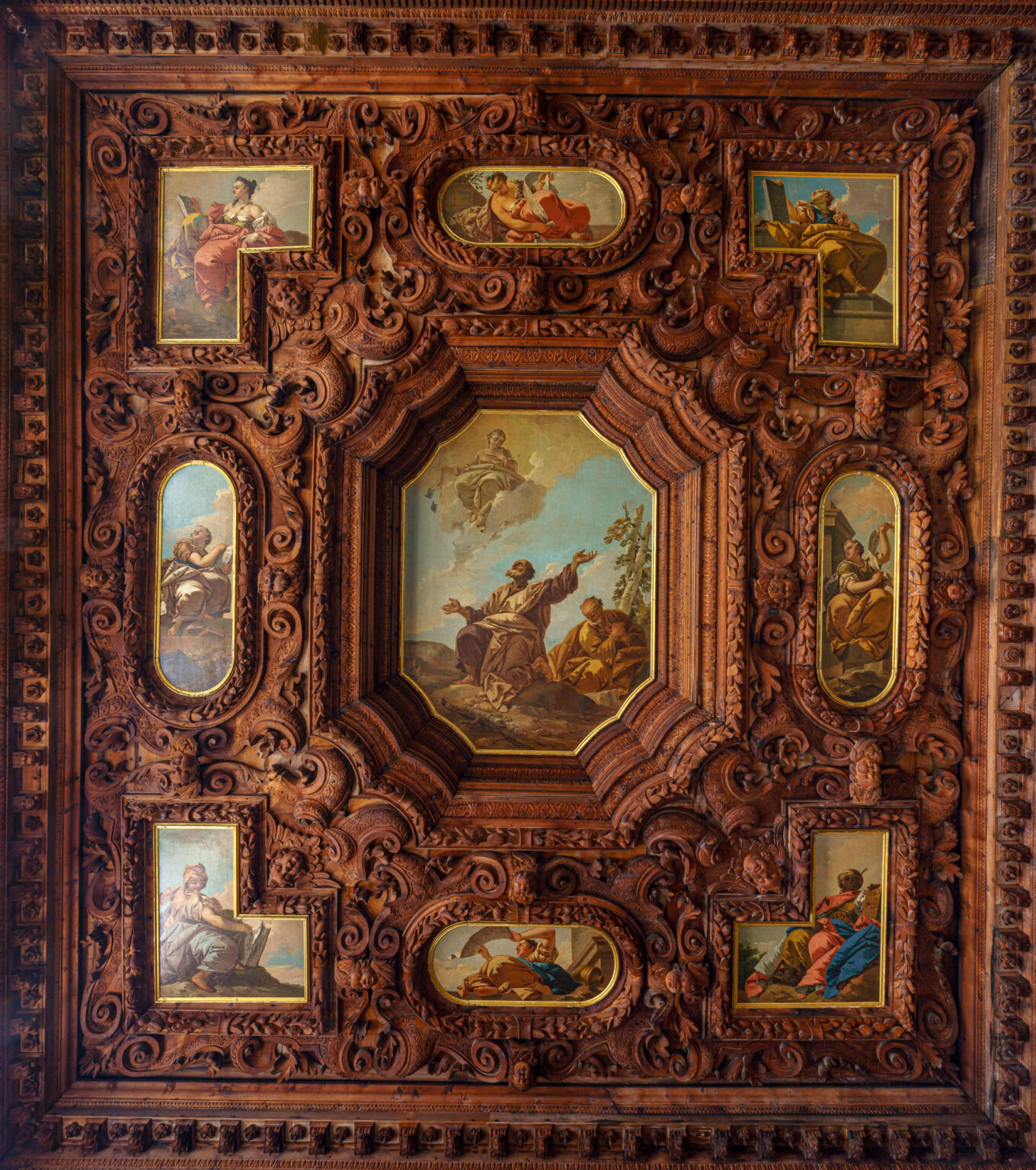
The complex structure of the coffered ceiling, carved in wood in a style still typical of the late seventeenth century, remained unfinished in terms of the gilding that had been planned for it. The iconographic design, conceived by Gaetano Zompini, was entirely executed by Giustino Menescardi between 1749 and 1753.

At the centre the canvas depicting The Virgin Appears to the Prophet Elijah on Mount Carmel stands out. In it, Mary, wearing the scapular, reassures the prophet – traditionally regarded as the inspiration behind the Carmelite Order – that his prayer for an end to the drought will be answered. The scene symbolises Mary’s role in the rebirth of life on earth, parched by sin.

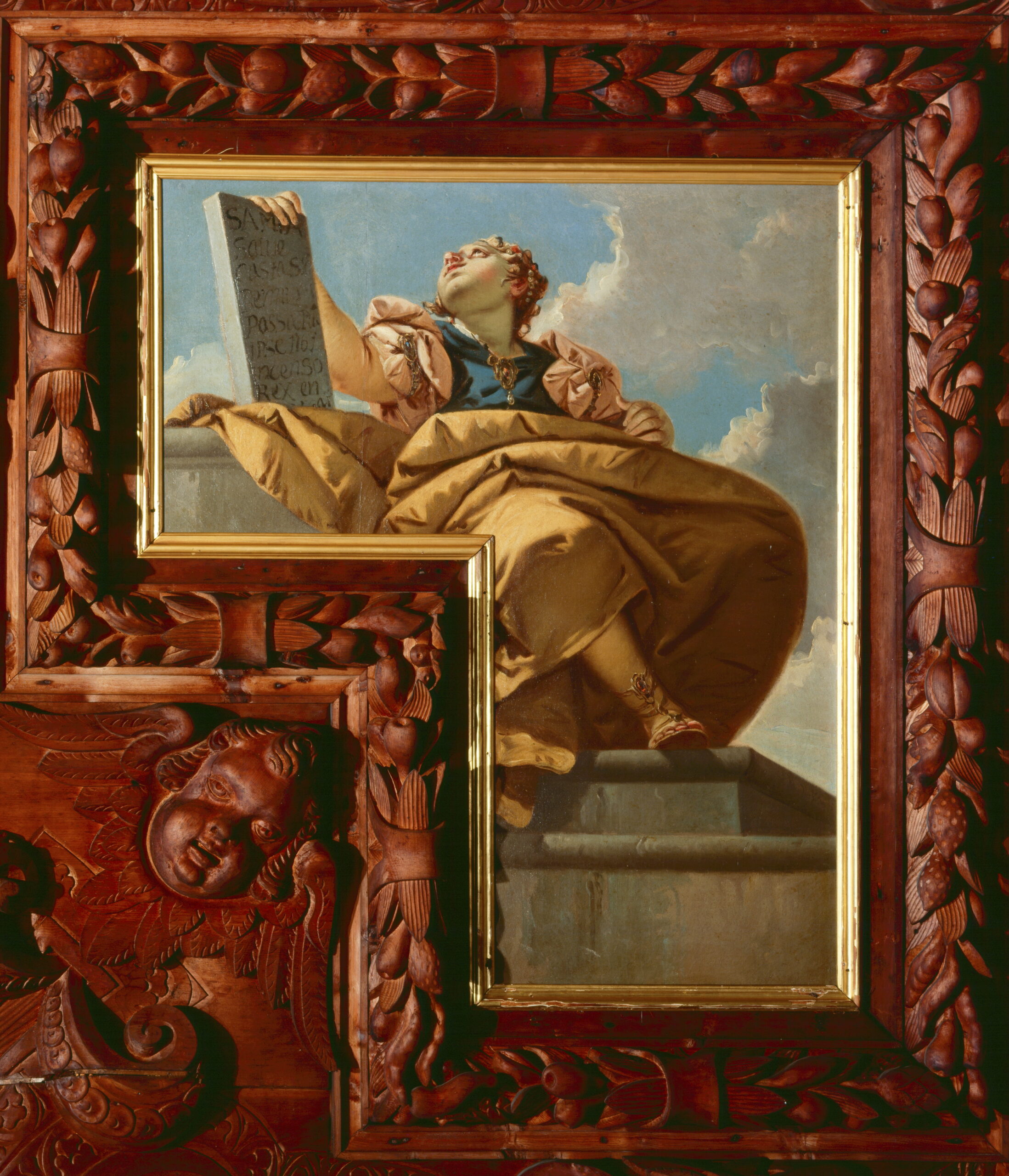
In the nine side panels, angular or oval canvases depict the Sibyls, holding books, tablets or scrolls bearing fragments of their prophecies concerning the Virgin and Christ, highlighting the link between pagan wisdom and the Christian mystery.