The History
The roots in a sorority of women
According to tradition, the origins of the devotional Scuola dedicated to Our Lady of Mount Carmel lie in an ancient association founded between the late thirteenth and early fourteenth centuries. Composed exclusively of women, this unique community was closely linked to the Carmelite monastery and the nearby church of Our Lady of the Carmel.
The sisters of the ‘Scuola di Santa Maria del Monte Carmelo’ had their own altar, dedicated to the Visitation, in the right aisle of the church, around which they used to gather to pray and discuss the organisation of the Scuola, intertwining devotion and community life. Their presence was so much appreciated that in 1300 the General of the Order, Gerardo da Bologna, granted them special spiritual privileges, similar to those of the Carmelites, and these were later confirmed in 1318.
The ‘Pinzochere dei Carmini’
The Scuola, whose members were known as the ‘Pinzochere dei Carmini’ – the ‘zealots of the Carmini’ – appears to have been well-attended and well-organised, led by an internal governing body elected by all the sisters. Many of them appear to have lived and worked in workshops situated near Campo Santa Margherita or along Calle delle Pazienze, which runs alongside the left side of the church of the Carmini. Around 1498, they gathered – and some even lived – in a house near the monastery, known as the hospice of the Madonna della Speranza, where they shared prayers, work and community life.
Many of these women were probably poor, elderly and alone, and were supported by the younger, wealthier lay sisters, who contributed financially to their upkeep or, in some cases, even to their accommodation in the hospice.
A unique feature of the Scuola: the Marian scapular
It can be assumed that the Scuola had an organisational structure very similar to that of the male confraternities, but the ‘Pinzochere’ also contributed to their own upkeep through the proceeds of work carried out within the association. This distinguished them from the men’s Scuole, whose income came mainly from alms, bequests and income from real estate. It thus represented a significant innovation with regard to the devotional institutions of the time.
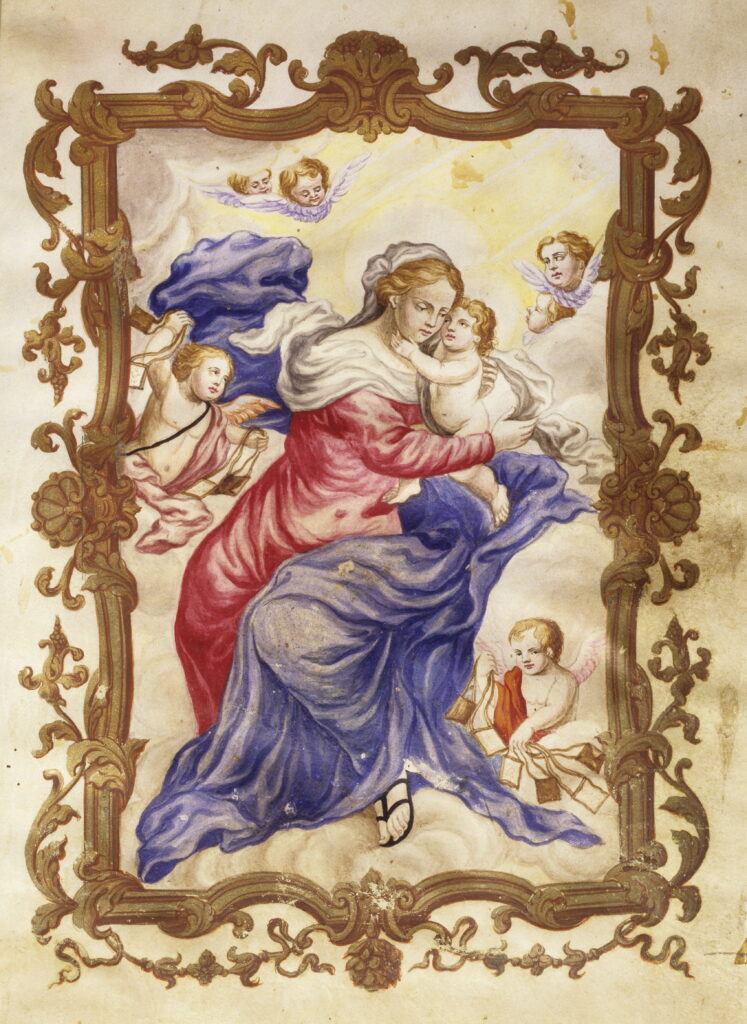
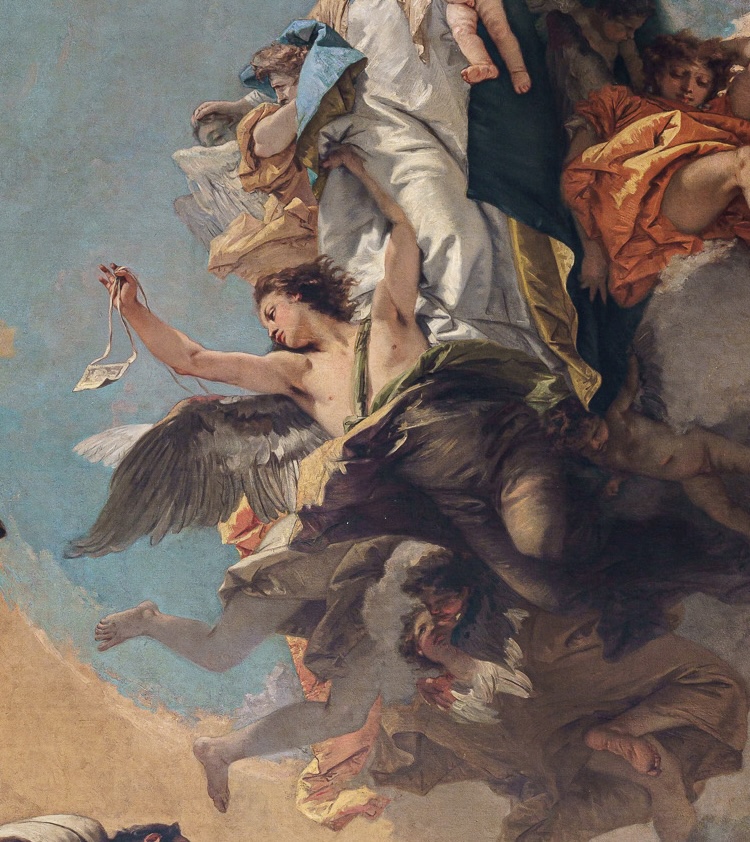
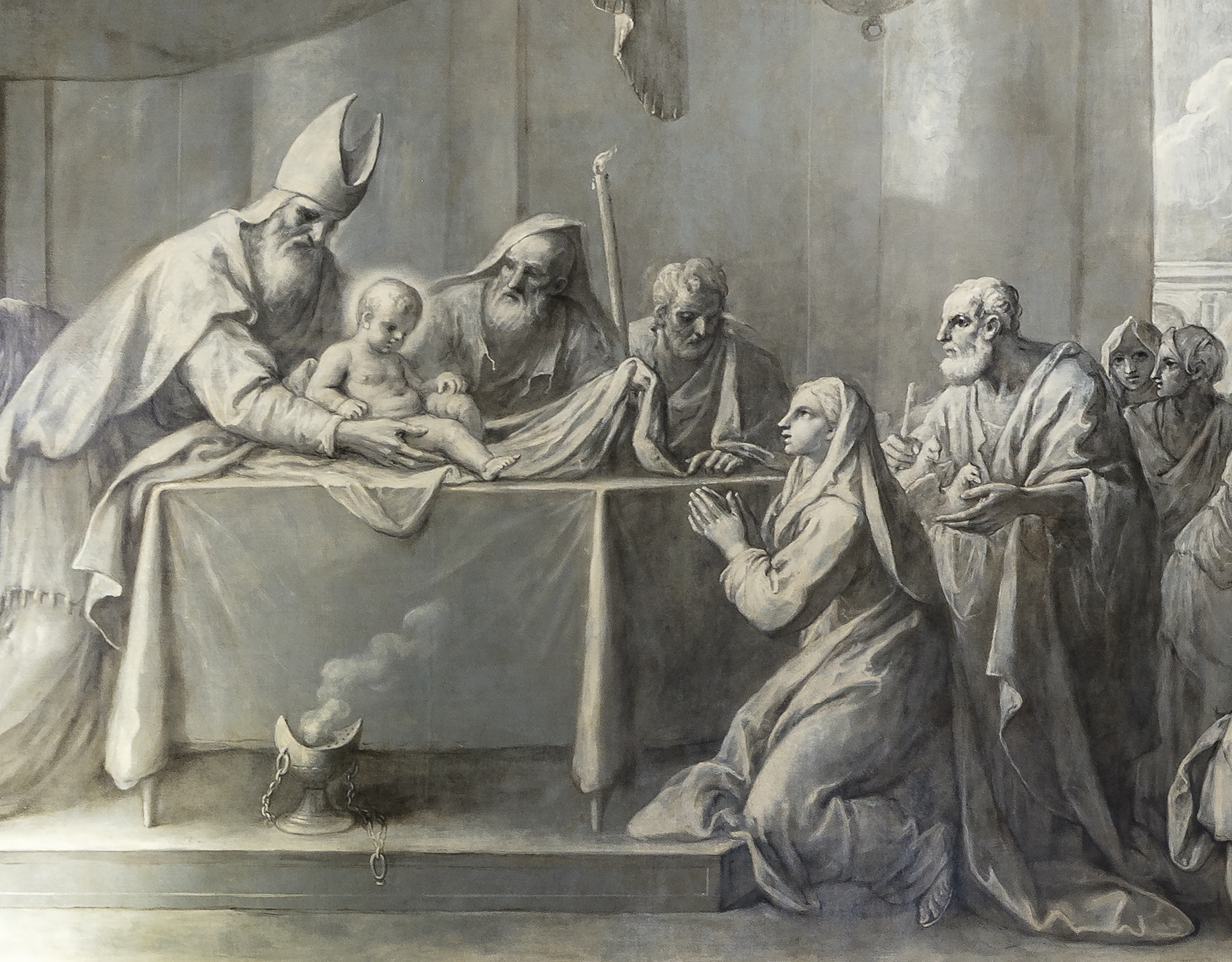
The sisters devoted themselves mainly to the making and sale of scapulars, also known in this context as ‘abitini’ or ‘pazienze’. A scapular consisted of two pieces of fabric joined by ribbons or cords and was worn over the shoulders, beneath one’s clothes, hanging down over the chest and back. The scapular was acquired in exchange for a donation and with a special blessing, which sealed a mutual promise: whoever wore it and led a devout and prayerful life would receive spiritual benefits after death, as well as effective protection from the adversities of life.
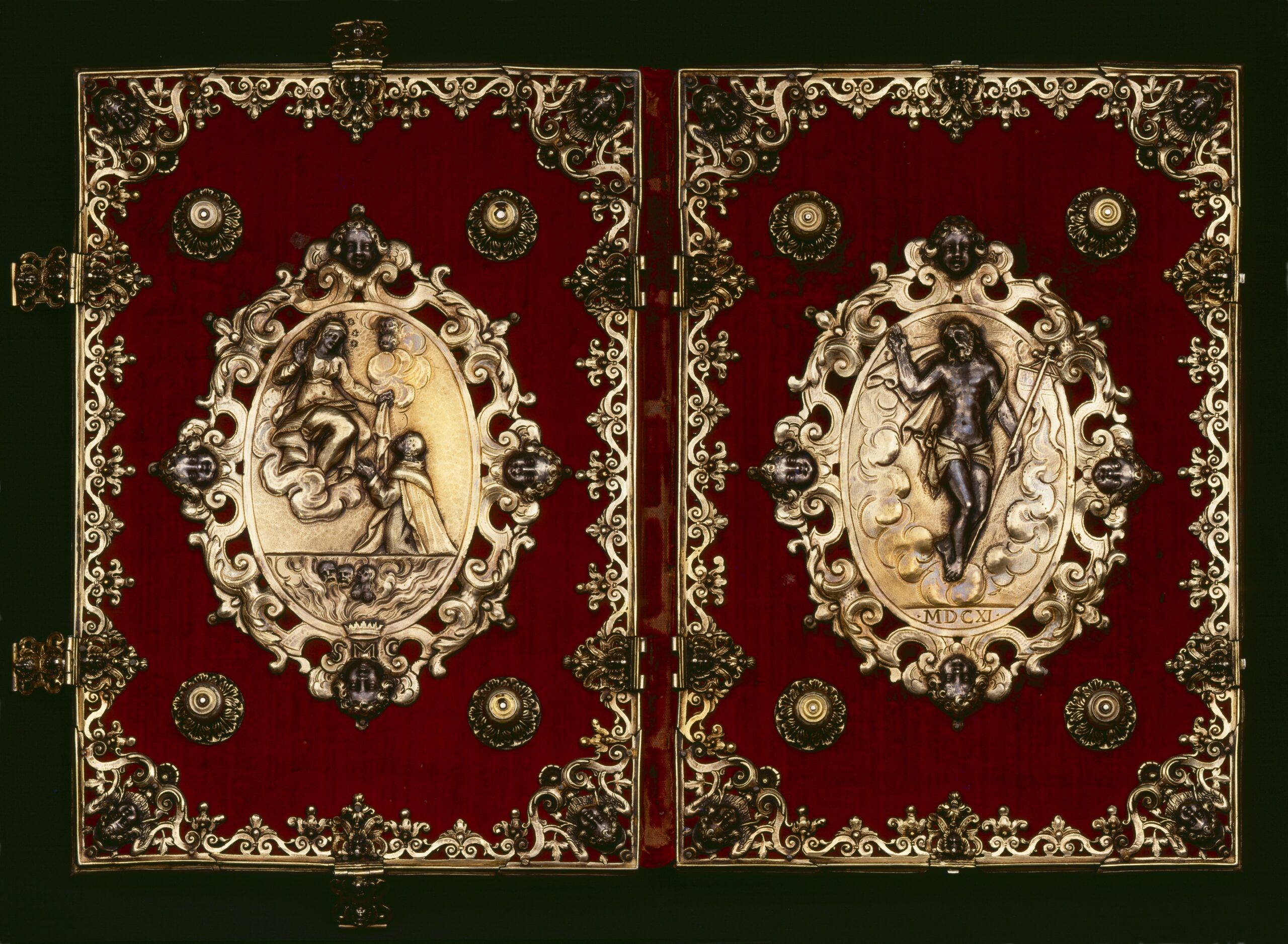
The most common version was undoubtedly the scapular of Our Lady of Mount Carmel, bearing the images of Christ and the Virgin Mary, which originated from an alleged apparition to St Simon Stock, the Prior General of the Carmelites, in 1251. According to tradition, he is shown on the top of Mount Carmel in Palestine in the act of receiving this devotional object from the hands of the Virgin herself, who promised him that anyone who died wearing it would be saved.
The ‘new’ devotional Scuola
By the end of the sixteenth century, there was a recognised need to reorganise the ancient women’s institution, which had likely become weakened institutionally and financially and was heavily dependent on the Carmelite Order.
Fearing the loss of a centuries-old devotional tradition linked to Our Lady of Mount Carmel and the scapular, a group of male citizens promoted the foundation of a new Scuola, which was to incorporate the existing group of devout women.
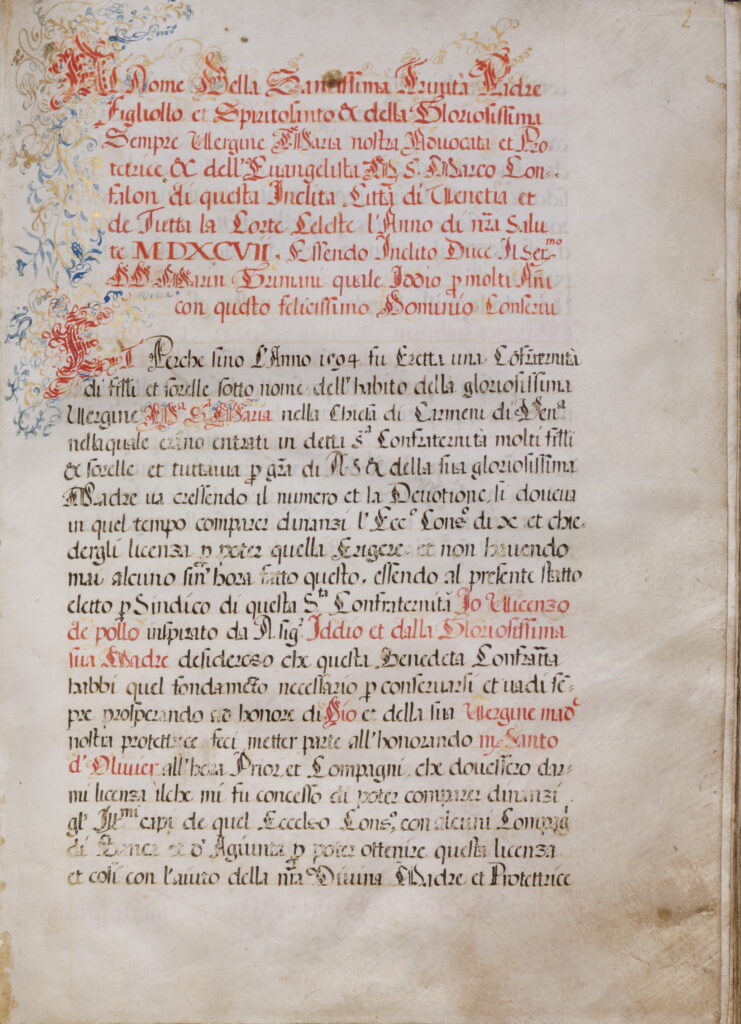
In 1593, Bernardino Soardi obtained authorisation from the Prior General of the Carmelites, Stefano Chizzola, to establish a Scuola dedicated to the Blessed Virgin of Carmel at the church of the Carmini. The fact that women were allowed to be part of the new institution is made clear in the text of the ‘Mariegola’, the Scuola’s charter, which defines it as a “Confraternity of brothers and sisters under the name of the habit of the most glorious Virgin Mary”. From the moment of its foundation, the Scuola adopted Our Lady of Mount Carmel as its principal object of worship and made the Marian scapular its identifying symbol.
A new altar
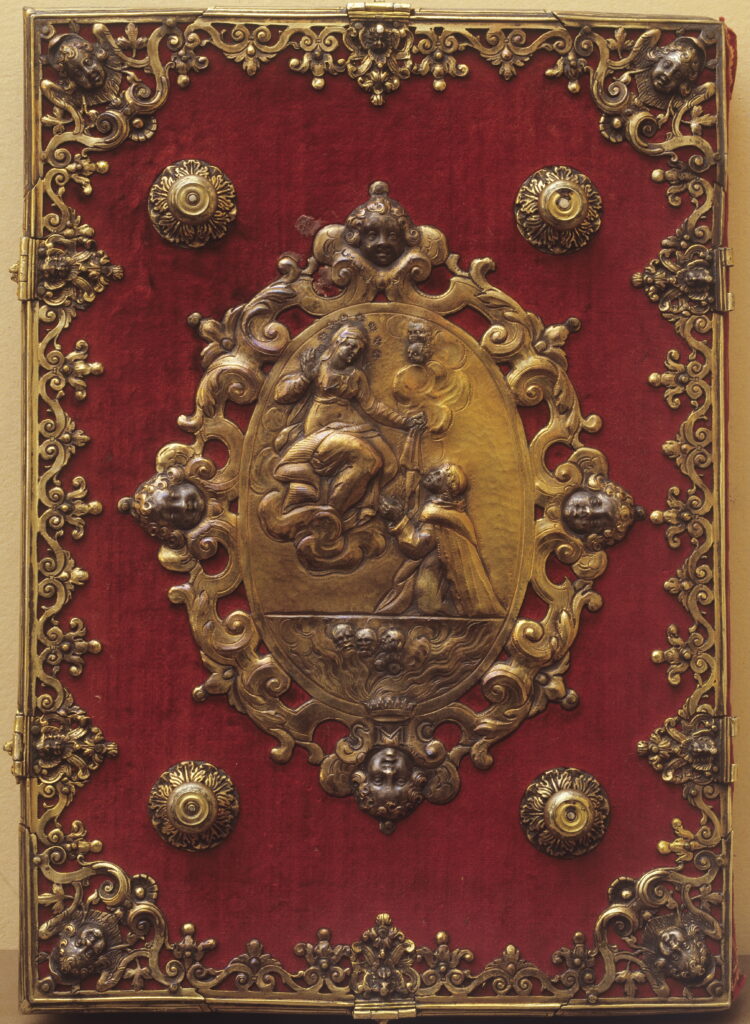
In 1594, the confraternity was granted the use of a room within the monastery for holding its meetings, as well as the right, for religious services, to use a large part of the right aisle of the church and the altar dedicated to Saint Mary Elizabeth, formerly belonging to the ‘Pinzochere’, subject to the payment of an annual fee. The altar, initially rebuilt in wood and rededicated to Our Lady of Mount Carmel, was adorned with an altarpiece depicting The Virgin presenting the scapular to Saint Simon Stock, a work by the Veronese artist Pase Pace, a member of the Scuola. In 1722, on the occasion of the altar’s reconstruction in marble, the altarpiece was enlarged by Zuanne Fontana with the addition, in the lower section, of souls in Purgatory.
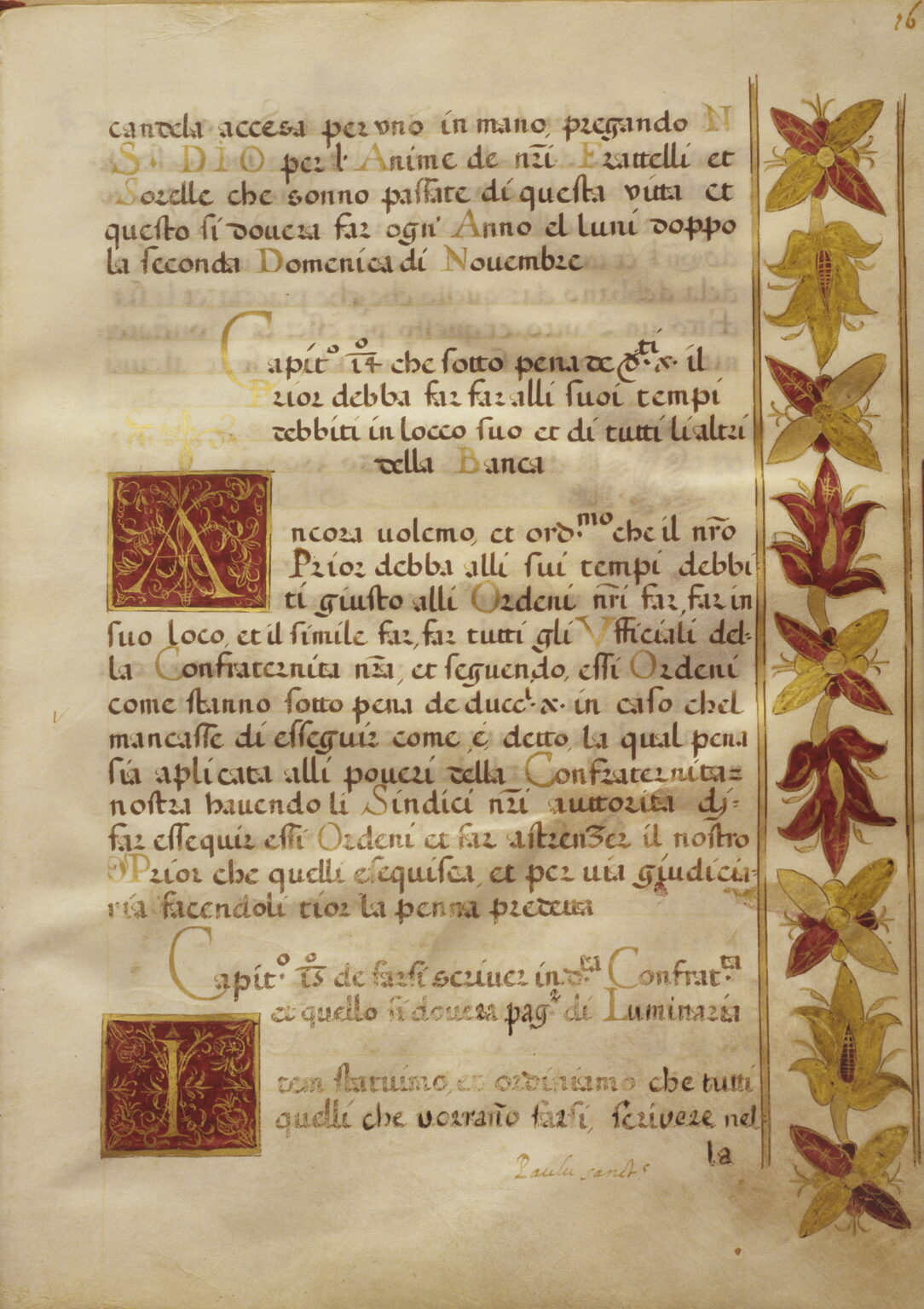
La Mariegola
Members of the Scuole were bound by a system based on specific duties of participation in the life of the institution; at the same time, these associations served as a genuine source of guidance and support in the face of life’s many difficulties. In this sense, joining the Scuola entailed not only the assumption of formal responsibilities, but also integration into a network of solidarity that offered material security and moral support throughout one’s life.
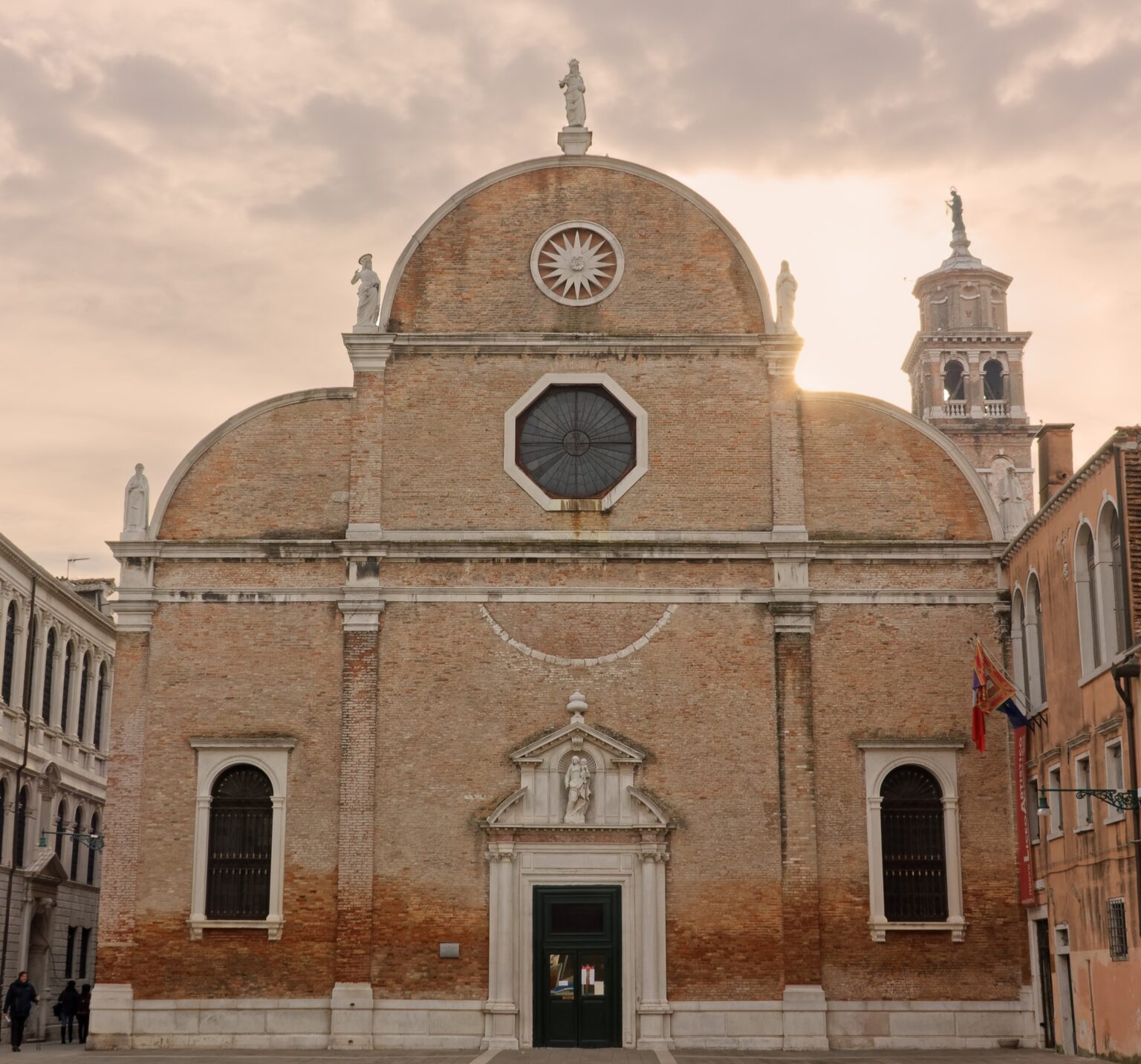
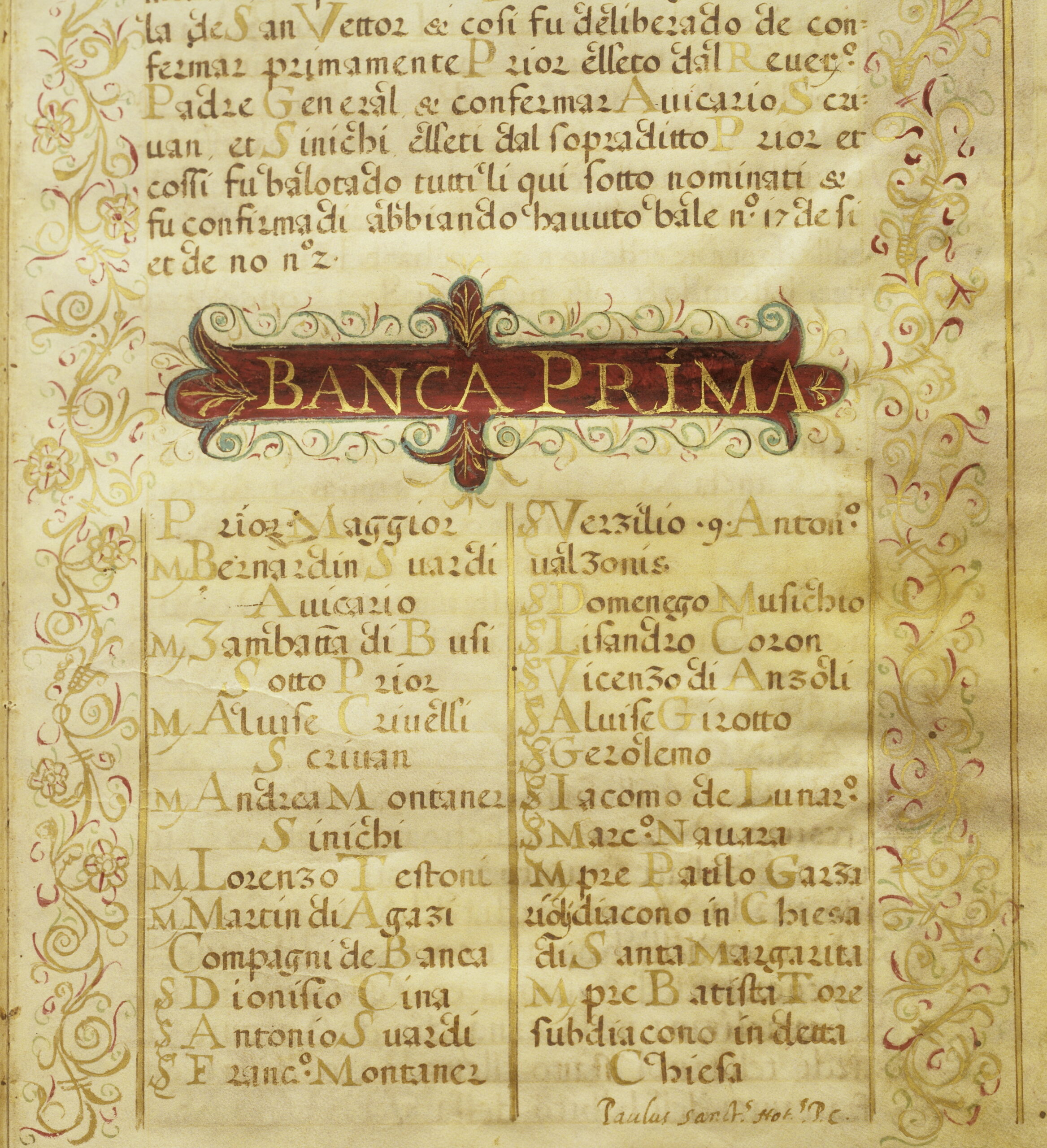
Each Scuola had its own specific set of rules, drawn up in writing, officially approved and binding on all members. The volume containing all this was the ‘Mariegola’, which was based on a comprehensive set of institutional aims from which precepts, rules of conduct and operational procedures were derived, designed to regulate the internal organisation and collective practices in a precise manner.
Individual behaviour and the common good